Last updated on September 2nd 2026
Whale Watching in Mauritius: Best Time, Tours & What to Expect
An honest guide to whale watching in Mauritius after two private trips and encounters with both humpback and sperm whales.
Whale watching ended up being one of the most unforgettable things I did during three weeks in Mauritius. And we actually went twice.
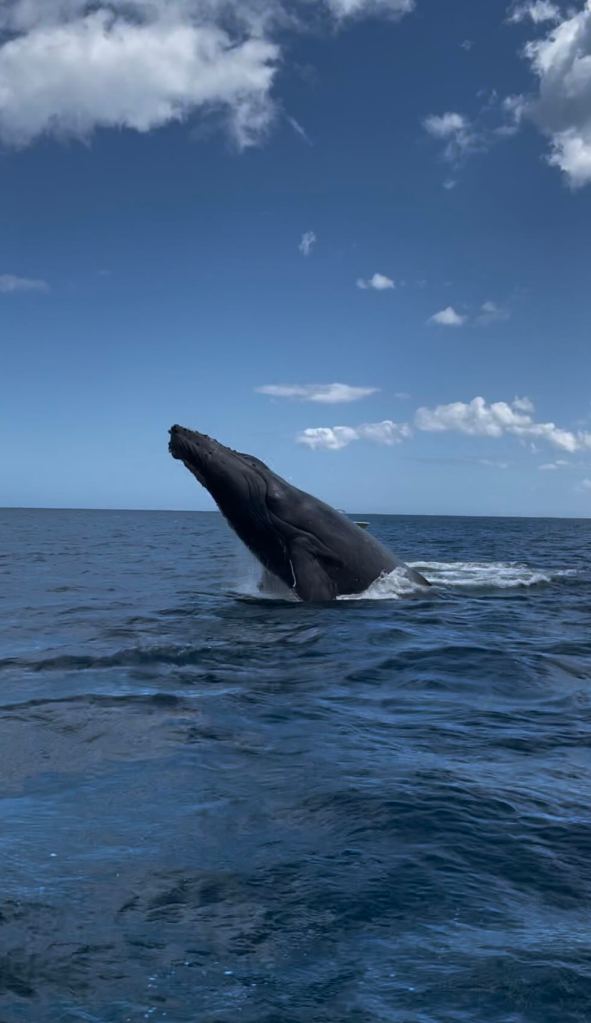
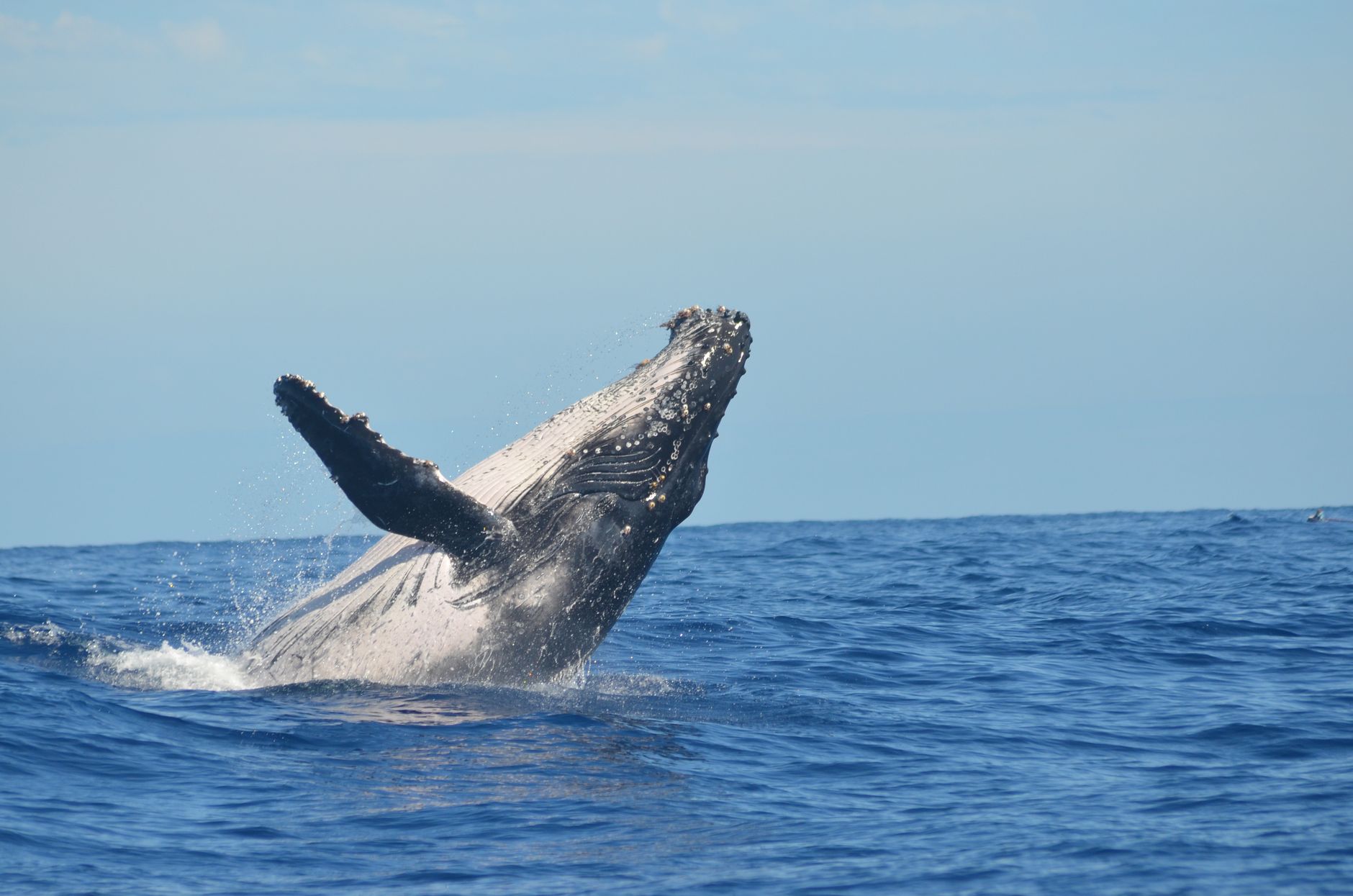
On our first trip, my twin sister, my mum and I found a family of humpback whales away from the other boats. For more than an hour, we watched them surface, dive and breach again and again. I stopped counting somewhere around 25 breaches, which apparently is not a normal Tuesday morning even by whale-watching standards.
A few days later, we went back out and found something completely different: Mauritius’ resident sperm whales.
BUCKET LIST ACTIVITY
Whale Watching in Mauritius: Is It Worth It?
Sperm whales can be found in Mauritian waters throughout the year, while humpback whales migrate past the island during the southern winter and spring. Mauritius’ official tourism site lists humpbacks from around July to November, while local marine researchers describe their season as roughly June to October.
In this guide, I will cover the best time for whale watching in Mauritius, which whales you can see, where tours depart, how much they cost, what happens on a tour and how to choose a responsible operator.
Once you’ve finished this guide, explore my Mauritius Travel Guide to help plan the rest of your trip. You’ll find detailed guides on the Most Beautiful Beaches in Mauritius, Where To Stay, and Top Things To Do on the island, all based on my own experiences exploring every corner of the island. Or want a ready to go holiday? Check out my 2-Week Itinerary for Mauritius.
QUICK GUIDE
Whale Watching in Mauritius at a Glance
Mauritius is particularly interesting because the Marine Megafauna Conservation Organisation (MMCO) has documented a small resident population of sperm whales around the island.
Don’t want to read my entire whale dissertation before booking a boat? Here is the quick version.
| Whale Watching in Mauritius | |
|---|---|
| Best overall season | July to September |
| Sperm whales | Possible year-round |
| Humpback whales | Roughly June to October/November |
| Best humpback period | July to September |
| Best area | West coast |
| Main departure point | Black River |
| Other departures | Tamarin and southwest coast |
| Best time of day | Early morning |
| Typical tour duration | Around 3 to 4 hours |
| Best tour type | Small group or private |
| Are sightings guaranteed? | No |
| Can you swim with whales? | No |
| What we paid | €150 per person for our private 4-hour trip |
WORTH IT?
Is Whale Watching in Mauritius Worth It?
For me, 100% yes. Whale watching was easily one of the top experiences from our entire Mauritius trip. But there is a fairly important disclaimer here. We got ridiculously lucky.
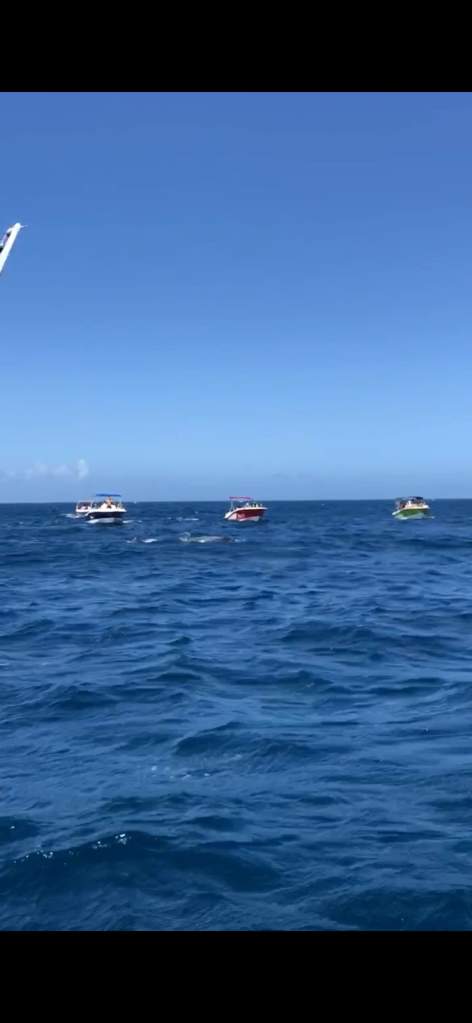
My twin sister, my mum and I decided to book a private trip rather than a large shared excursion. It cost more, but it gave our captain much more flexibility once we were out on the ocean. On our first morning, several boats were searching in one area while our captain decided to head somewhere completely different. And then we found them. A family of humpback whales.
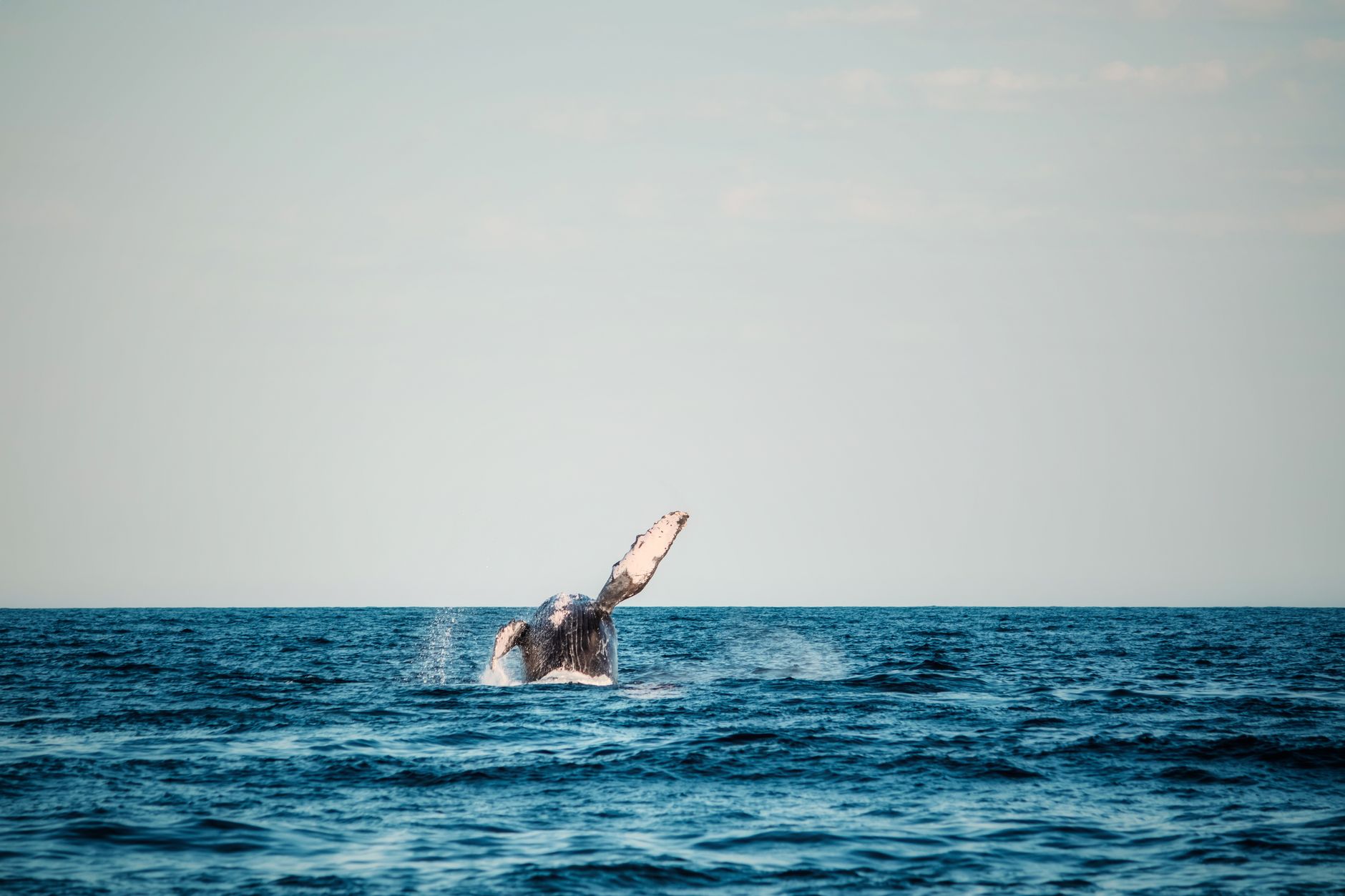
For more than an hour, we were alone watching them move through the water around us. They surfaced, disappeared underneath the boat, slapped their tails and repeatedly launched themselves almost completely out of the ocean. I counted somewhere around 25 breaches before giving up. Even our guides were losing their minds.
That is worth mentioning because I don’t want to sell you a fantasy where every whale tour looks like a National Geographic documentary with whales conveniently performing choreography beside the boat. It doesn’t. These are wild animals. You might see a whale breach twenty-five times. You might see a tail disappearing into the ocean. You might spend three hours staring suspiciously at waves that briefly resemble whales. That uncertainty is part of wildlife watching.
Our Second Whale Watching Trip
Because apparently one extraordinary whale encounter was not enough, we booked another private trip a few days later. This time we found sperm whales. And the experience was completely different.
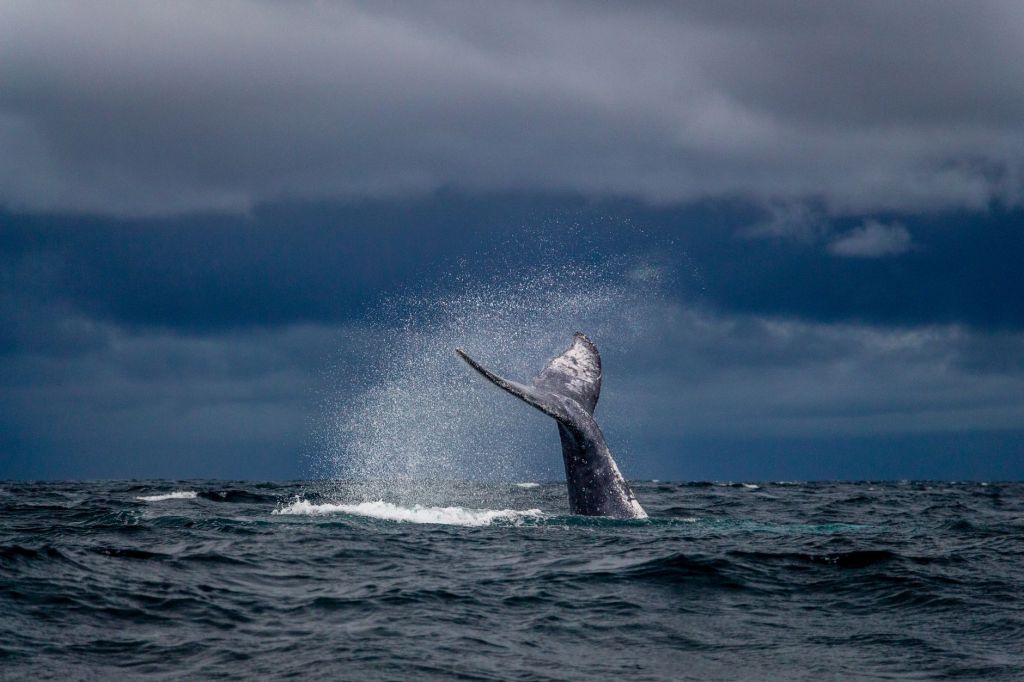
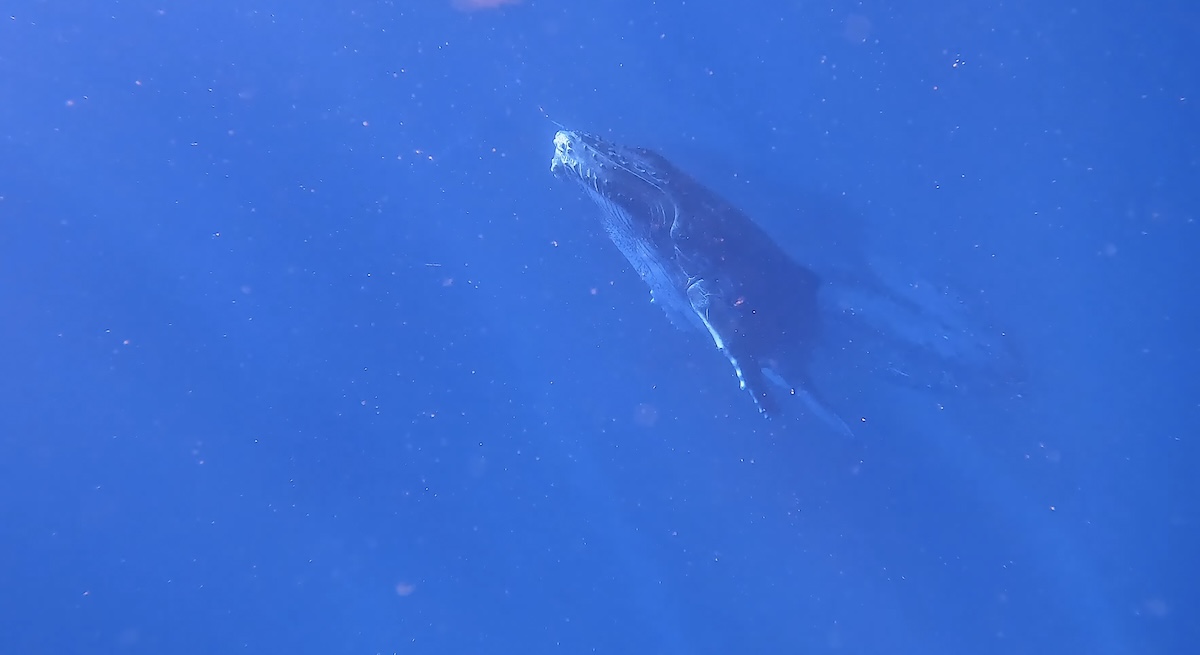
Humpbacks can be incredibly active at the surface, particularly during migration and breeding season. Sperm whales spend much of their lives diving into deep ocean water, surfacing primarily to breathe and recover between dives.
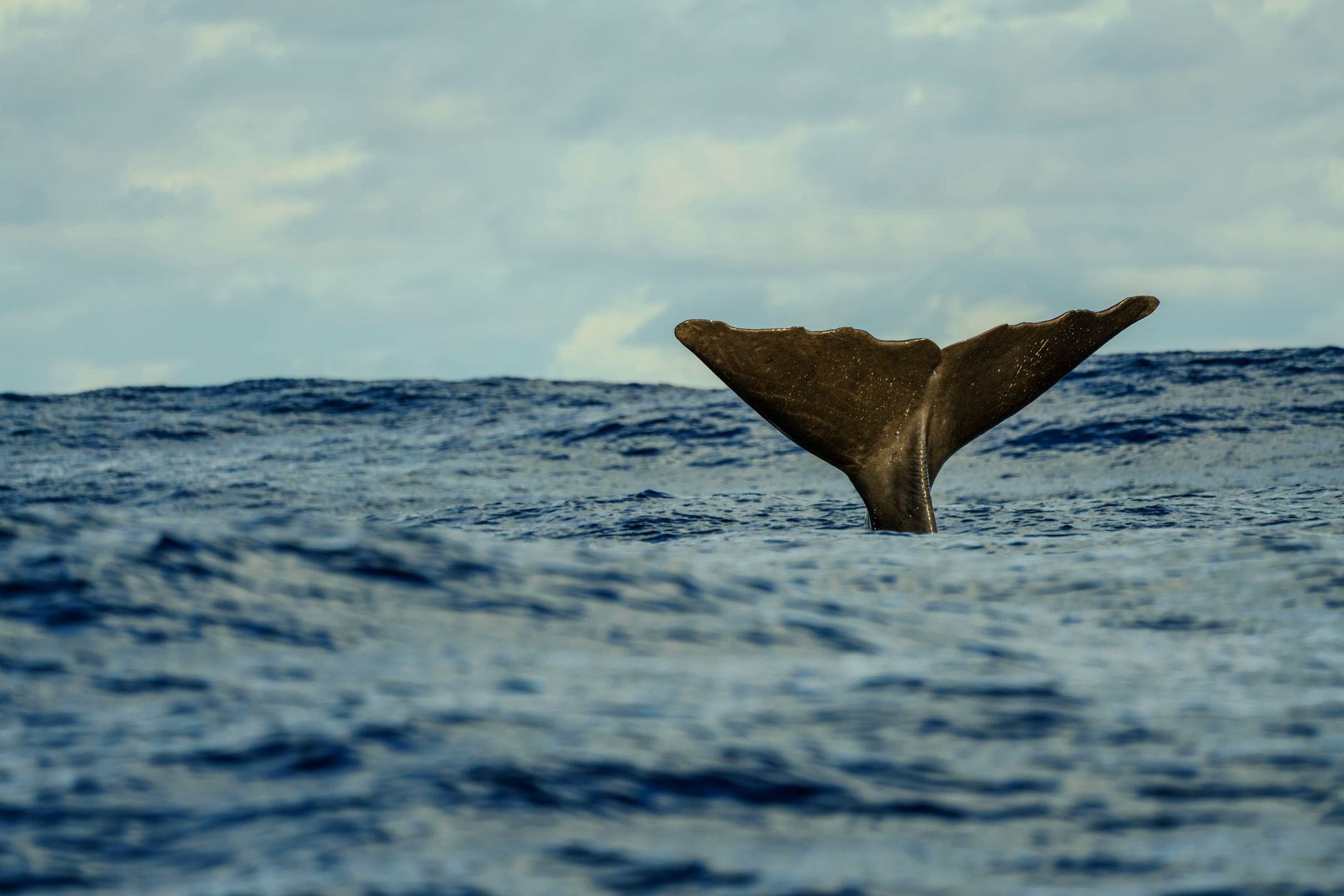
Watching one slowly rise through that enormous dark-blue ocean is bizarrely peaceful. Then the tail lifts. And within seconds, this enormous animal has disappeared underneath you.
When you realise how deep the water is and how far these animals can dive, you suddenly feel very, very small. Which I actually quite enjoy occasionally. Keeps the ego in check.
Why Mauritius Is So Good for Whale Watching
Mauritius sits beside deep ocean habitat used by several cetacean species.
Around 15 cetacean species have been recorded in Mauritian waters, including sperm whales, humpback whales and several dolphin species. The Mascarene region is also recognised as an Important Marine Mammal Area.
For travellers, the two whales you are most likely to hear about are: Sperm whales, which occur around Mauritius throughout the year. And: Humpback whales, which migrate into the region seasonally.
The west coast is particularly useful because whale-watching boats can reach deeper offshore waters relatively quickly. That means you do not necessarily need to spend half your day motoring across the Indian Ocean before the actual searching begins.
TYPE OF WHALES
What Whales Can You See in Mauritius?
The two main whale species visitors come to see are sperm whales and humpback whales.
But they are very different animals, and the experience of seeing each one is completely different too.
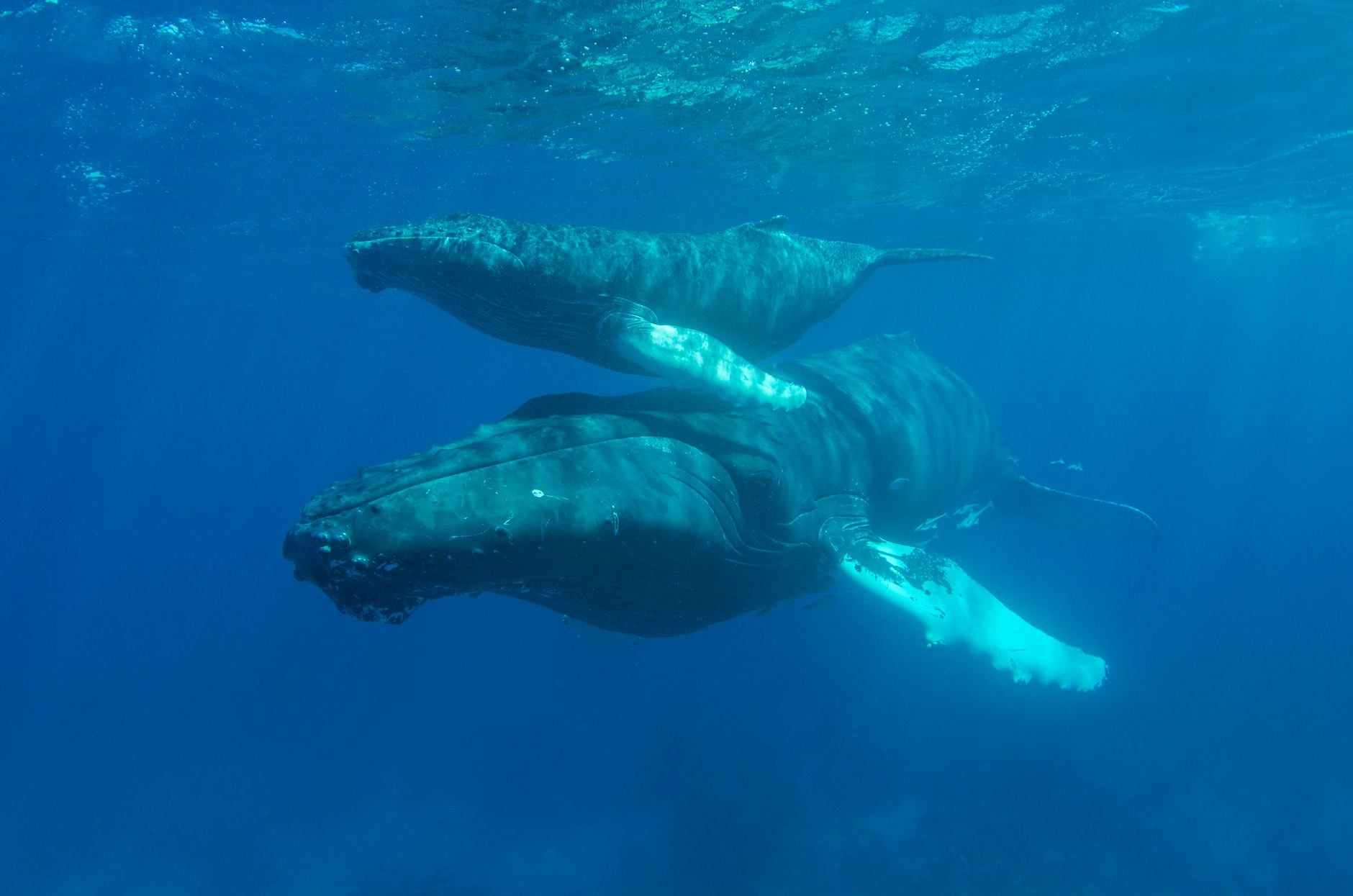

Sperm Whales in Mauritius
Best season: Year-round
Where: Primarily deeper waters off Mauritius
Our experience: Seen on our second private whale-watching trip
Sperm whales are one of the things that make Mauritius genuinely unusual as a whale-watching destination.
Unlike humpback whales, which migrate through seasonally, sperm whales occur in Mauritian waters throughout the year.
Marine Megafauna Conservation Organisation‘s long-running MAUBYDICK project has studied Mauritius’ sperm whales for more than a decade and identified a small resident population around the island.
They are also extraordinary animals.
Sperm whales are the largest toothed whales in the world, and much of their lives happens far below the surface.
They make deep dives in search of prey before returning to the surface to breathe.
That means the classic sperm whale moment is slightly different from seeing a humpback breach.
You watch this enormous dark body resting at the surface.
Then the whale arches.
Its tail lifts out of the water.
And it disappears vertically into the deep.
It is one of those moments where everyone on the boat suddenly becomes very quiet.
Humpback Whales in Mauritius
Best season: Roughly June to October/November
Best chance: July to September
Our experience: Mother/family group with repeated breaching
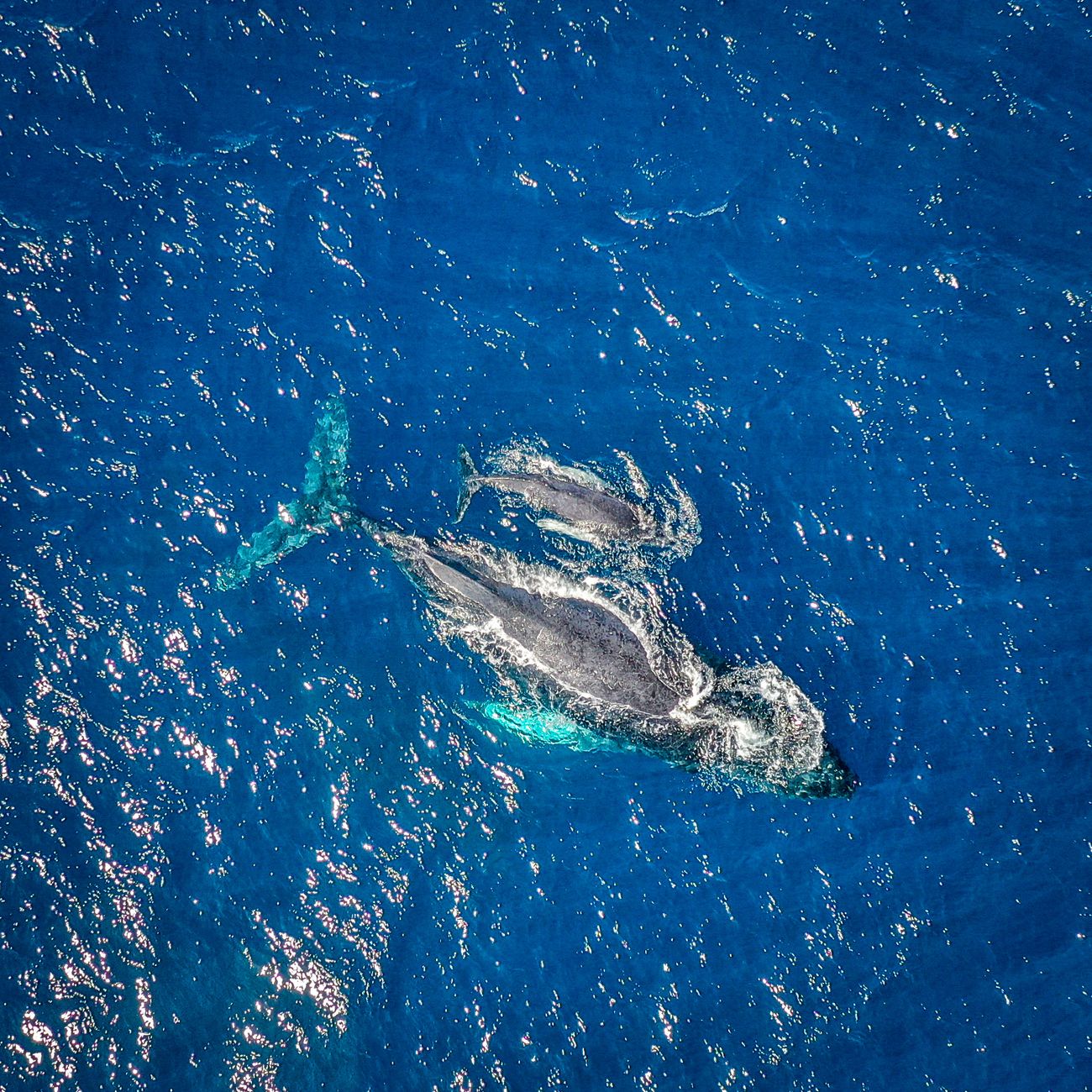
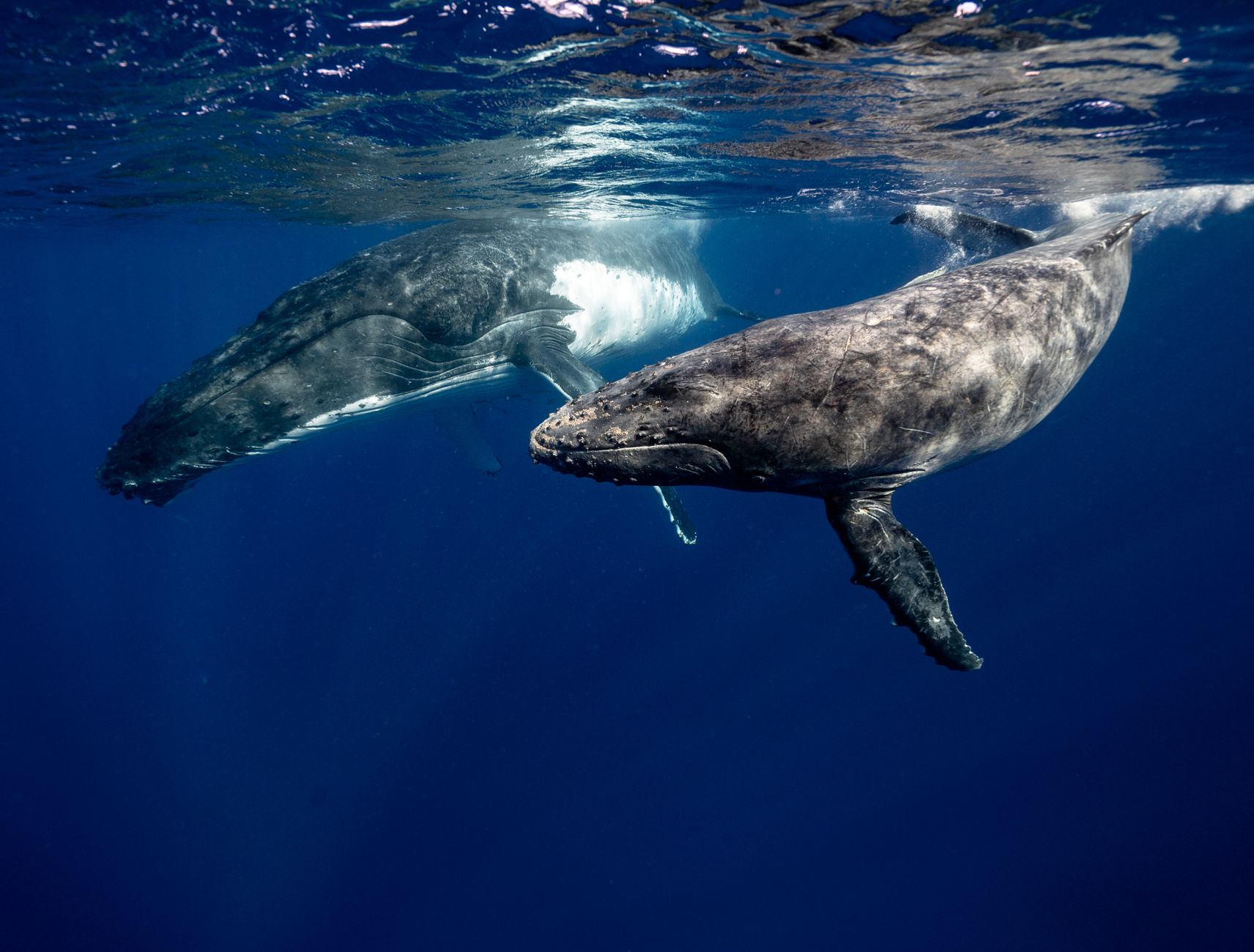
Humpback whales migrate into the warm waters around Mauritius during the southern hemisphere winter and spring.
The precise season varies slightly depending on the source and, more importantly, the whales themselves.
Mauritius’ official tourism platform describes the migration period as July to November, while Mauritius’ Marine Megafauna Conservation Organisation describes humpbacks visiting from approximately June to October.
Rather than obsessing over whether October 31 suddenly marks the end of whale season, I would think about it like this:
July to September gives you the strongest overlap for humpback whale watching.
Humpbacks are the whales people tend to imagine when they picture dramatic whale encounters.
They may:
- Breach
- Slap their tails
- Lift their pectoral fins
- Spy-hop
- Travel with calves
- Surface repeatedly
But again, they may also do absolutely none of those things.
A whale is under no contractual obligation to entertain you.
What Other Marine Life Can You See?
Whale watching in Mauritius can turn into a much broader wildlife trip.
Depending on the day and route, you may also encounter:
- Spinner dolphins
- Bottlenose dolphins
- Pilot whales
- Sea turtles
- Flying fish
- Tuna
- Seabirds
Around 15 cetacean species have been documented in Mauritian waters, so humpbacks and sperm whales are certainly not the only marine mammals moving through this part of the Indian Ocean.
Just remember that none of it is guaranteed.
That includes dolphins.
Wildlife occasionally refuses to cooperate with itineraries. Very inconsiderate of them.
BEST TIME
Best Time for Whale Watching in Mauritius
Whale watching is possible throughout the year, but the species you see depends on when you visit. Resident sperm whales remain close to Mauritius all year, while humpback whales migrate through the island’s waters during winter.
| Month | Sperm Whales | Humpback Whales |
|---|---|---|
| January | Year-round possibility | Unlikely |
| February | Year-round possibility | Unlikely |
| March | Year-round possibility | Unlikely |
| April | Year-round possibility | Unlikely |
| May | Year-round possibility | Possible early arrivals |
| June | Year-round possibility | Season beginning |
| July | Year-round possibility | Prime period |
| August | Year-round possibility | Prime period |
| September | Year-round possibility | Prime period |
| October | Year-round possibility | Still possible |
| November | Year-round possibility | Possible late sightings |
| December | Year-round possibility | Unlikely |
What Is the Best Month for Whale Watching in Mauritius?
If whale watching is one of the main reasons you are coming to Mauritius, I would personally aim for:
July, August or September.
That gives you the chance of encountering both resident sperm whales and migrating humpback whales.
It does not mean you will see both. It simply gives you the strongest seasonal overlap.
What Is the Best Time of Day?
Go early. Most serious whale-watching trips depart in the morning, and Mauritius’ whale-watching rules regulate commercial activities and skipper conduct around cetaceans.
Morning conditions can also be more comfortable before wind builds later in the day. Our trips started early, and I would happily sacrifice a lie-in for this. You can sleep on a beach afterwards. That is what tropical islands are for.
WHERE
Where to Go Whale Watching in Mauritius
The west and southwest coast are the main areas for whale-watching trips. For most travellers, Black River is the easiest place to start.
Black River
Best overall departure area: Grande Rivière Noire, normally shortened to Black River, is one of Mauritius’ main centres for whale and dolphin excursions. Several current operators depart from here, and the deeper waters west of the island are accessible relatively quickly. This is where I would search first when comparing tours. It also makes Black River a very useful base if your Mauritius itinerary includes:
- Le Morne
- Black River Gorges
- Chamarel
- La Preneuse
- Tamarin
- Île aux Bénitiers
And conveniently, you can go straight from watching enormous whales to lying horizontally on a beach.
Tamarin
Tamarin sits just north of Black River and is another common base for marine excursions. The area is particularly well known for dolphins, and some operators combine dolphin encounters with a search for whales farther offshore. If you are staying around Tamarin or Flic-en-Flac, you do not necessarily need to relocate to another part of Mauritius just to go whale watching.
Le Morne & Southwest Mauritius
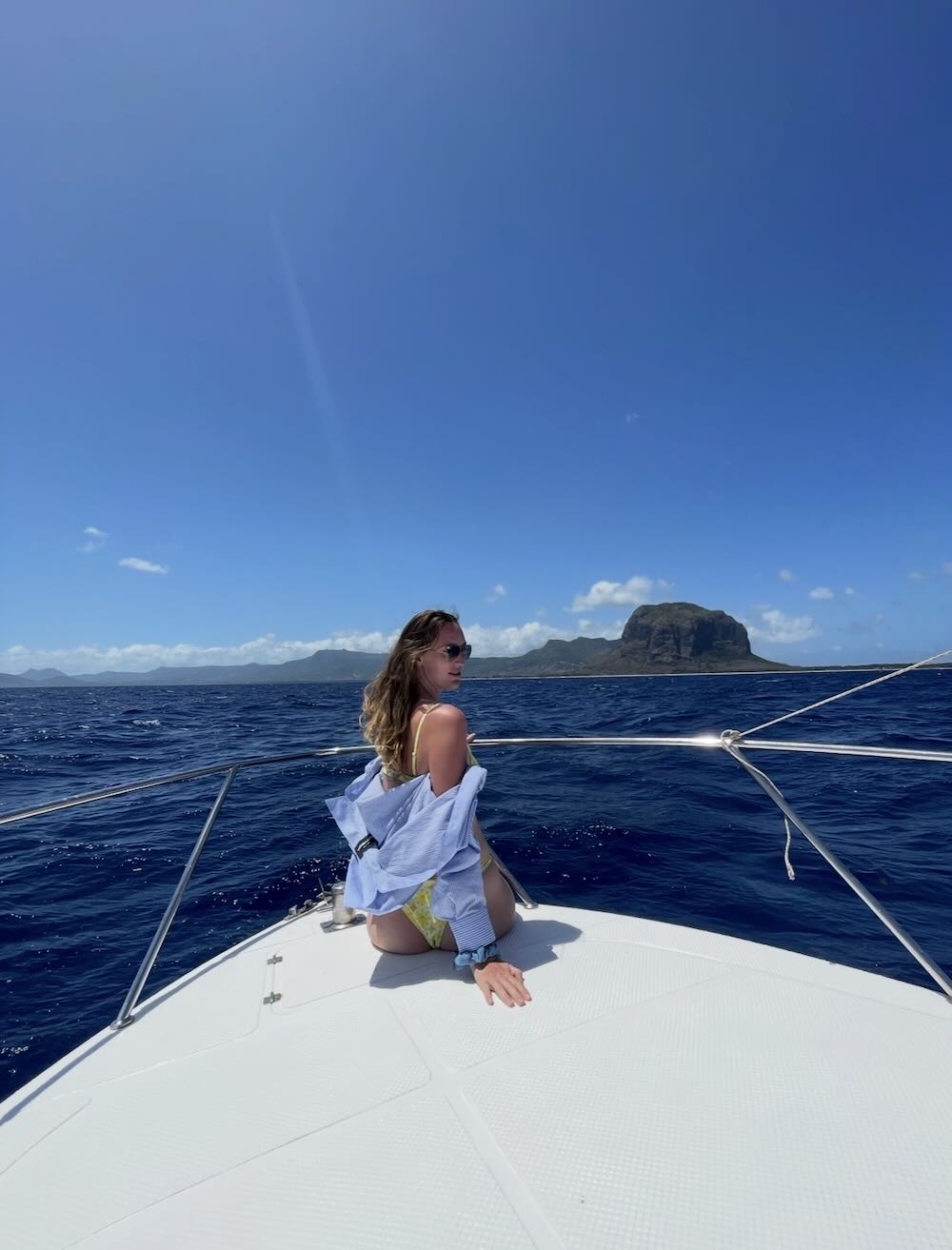
Some private excursions operate from farther south around the Le Morne area too. The enormous advantage is fairly obvious. Your boat trip comes with Le Morne Brabant casually sitting in the background. If you are staying around Le Morne or La Gaulette, check departure locations carefully before booking because driving to Black River at some barbaric hour before sunrise may not be necessary.
WHAT TO EXPECT
What to Expect on a Whale Watching Tour in Mauritius
Every trip is different, but most dedicated whale-watching excursions follow roughly the same pattern.
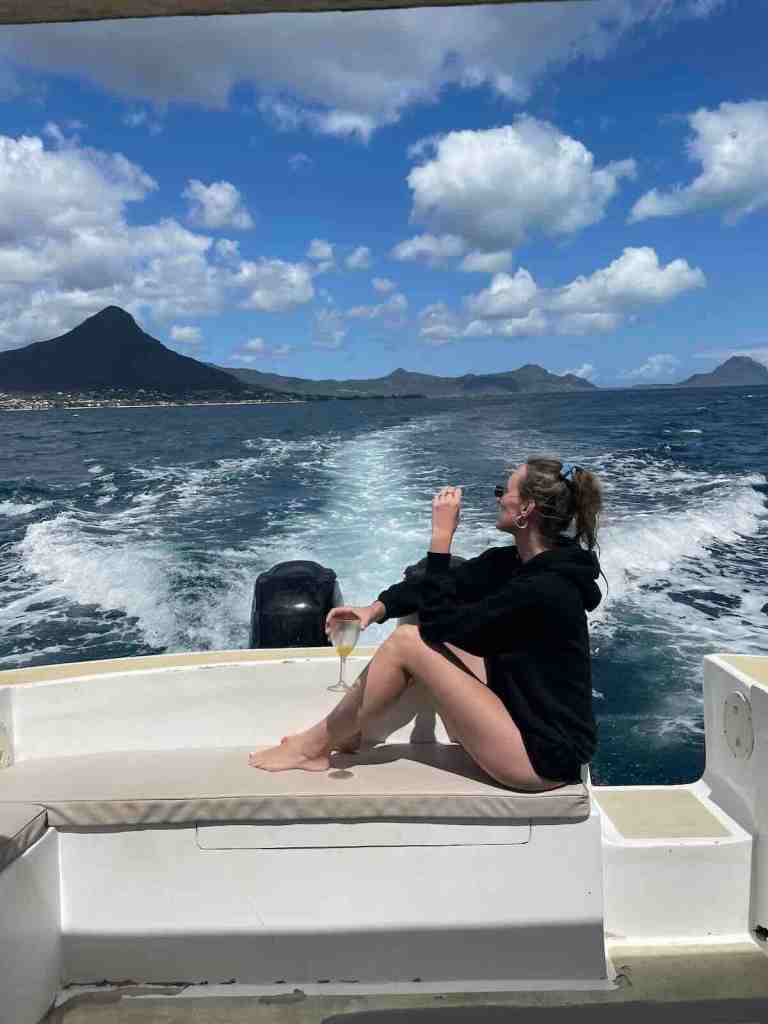
You arrive early in the morning, meet your skipper and receive a safety briefing. Then you head offshore. And then you search. This bit is important because there is no underwater whale delivery service.
Your crew may use knowledge from previous sightings, visual signs, communication with other boats and, in the case of some specialist operators, hydrophones to help locate sperm whales. You may spend quite a while searching before anything happens.=
Then suddenly someone sees a blow in the distance. And the atmosphere on the boat changes instantly.
Once a whale is located, a responsible skipper should slow down, respect the legally defined viewing zones and let the whale determine what happens next rather than racing directly at it. Mauritian regulations establish a 100-metre exclusion zone around whales, with a further regulated zone between 100 and 200 metres.
Sometimes the encounter lasts only a few minutes. Sometimes the whales stay around considerably longer. Our humpback encounter lasted over an hour. That was exceptional.
HOW LONG
How Long Is a Whale Watching Tour in Mauritius?
Most dedicated whale-watching trips I found while updating this guide last around 2.5 to 4 hours, although combined dolphin, snorkeling or full-day trips can run considerably longer.
Current operators around Black River advertise dedicated whale tours of around three to four hours. Personally, I think around four hours is ideal.
It gives your skipper enough time to search without turning the experience into an entire day bouncing around offshore.
TYPE OF TOUR
Private vs Shared Whale Watching Tour
We chose a private whale-watching tour, and if your budget allows it, I would choose private again.
Not because the whales somehow respect wealth and appear more frequently beside expensive boats. Sadly, no VIP cetacean programme exists.
The advantage is flexibility.
| Shared Tour | Private Tour | |
|---|---|---|
| Price | Cheaper | More expensive |
| Passengers | More people | Your group only |
| Flexibility | Fixed | Much better |
| Photography | Harder | Easier |
| Wildlife strategy | Less control | Captain can change route |
| Best for | Budget travellers | Families, photographers, wildlife lovers |
On our first trip, being private made a massive difference. Other boats had congregated in one area. Our captain decided not to join them. Instead, we went looking somewhere else.
That decision led to the incredible humpback encounter I described earlier. Would that happen every time? Absolutely not.
But having the freedom to leave a crowd is something I personally value enormously on wildlife tours.
COST
How Much Does Whale Watching Cost in Mauritius?
Prices vary enormously depending on:
- Shared versus private boat
- Boat size
- Tour duration
- Number of passengers
- Whether dolphins or snorkeling are included
- Hotel transfers
- Food and drinks
- Type of boat
We paid around €150 per person for a four-hour private whale-watching trip.
While updating this guide in 2026, I found shared whale-focused excursions starting at roughly €74 per person, while dedicated private boats were commonly listed from roughly €440 to €740+ per boat, depending on boat size and operator. More elaborate combined and luxury excursions can cost considerably more.
| Tour | Rough 2026 Price |
|---|---|
| Shared whale-watching trip | From around €70+ pp |
| Small private whale-watching boat | Around €440 to €600+ |
| Larger private boat | Around €600 to €750+ |
| Long combined/private experience | €800+ |
Prices change, so always check the current rate directly before booking.
I would also not automatically choose the cheapest tour.
With wildlife activities, the behaviour of the operator matters more to me than saving €20.

ETHICAL TOUR
Can You Swim With Whales in Mauritius?
No. This needs to be really clear because you will still find tours and old information online suggesting otherwise.
Under Mauritius’ whale-watching rules, commercial operators are not permitted to allow passengers to swim, dive or snorkel with whales. The Mauritius Tourism Authority issued a specific reminder to licensed pleasure craft operators in July 2024 stating that allowing passengers to enter the water with whales is an offence.
That means if a whale-watching operator advertises swimming with sperm whales or humpback whales, I would not book them. Even if someone tells you: “But everybody does it.” That is not a particularly convincing interpretation of wildlife law. Watch them from the boat. It is incredible enough.
RULES AND REGULATION
Whale Watching Rules in Mauritius
Mauritius has specific regulations governing commercial dolphin and whale-watching activities.
Among other requirements, commercial operators must be licensed, boats must be operated by appropriately certified skippers and authorised boats must meet specific equipment requirements. For whales, the regulations define:
0 to 100 metres: Exclusion zone
100 to 200 metres: Restricted approach zone
Boat behaviour is regulated inside these areas to reduce disturbance and collision risk. That does not mean every boat on the water follows the rules perfectly. Which is exactly why choosing your operator matters.
HOW TO PICK A TOUR
How to Choose an Ethical Whale Watching Tour
Whale watching can be incredible without turning into twenty speedboats chasing the same animal around the ocean.
Before booking, I would ask the operator directly:
Are you licensed for whale watching?
The Tourism Authority regulates commercial whale and dolphin-watching operators.
Do you allow guests to enter the water with whales?
The correct answer should be no.
How many people are on the boat?
Smaller groups generally create a calmer experience and make photography much easier.
What happens if several boats find the same whale?
A responsible skipper should not surround, chase or repeatedly cut across an animal’s path.
Do you guarantee whale sightings?
I am immediately suspicious of anybody guaranteeing a wild animal. Whales have not signed a service-level agreement with your tour company.
What happens if conditions are bad?
A good operator should prioritise weather and safety over forcing a departure simply because somebody paid for Tuesday.
RED FLAGS
Red Flags I Would Avoid
I would not book a company if they:
- Advertise swimming with whales
- Guarantee a whale sighting
- Chase whales at high speed
- Surround animals with other boats
- Cut directly across a whale’s path
- Approach mothers and calves aggressively
- Encourage touching wildlife
- Ignore legal viewing distances
- Seem more interested in creating underwater Instagram footage than protecting the animals
Mauritius’ resident sperm whale population is small and already faces pressure from human activity, including marine traffic and tourism. Local marine researchers specifically identify increasing human impacts as a conservation concern.
Whale watching only stays magical if the whales are allowed to be whales.
SWIMMING WITH DOLPHINS
Can You Swim With Dolphins in Mauritius?
This is where the law is different.
Licensed operators can offer swimming with dolphins, subject to Mauritius’ specific regulations governing the activity.
That does not extend to whales.
Dolphin tours are particularly common around Tamarin and Black River.
If you want to combine dolphins and whale watching, check exactly what your tour includes before booking.
A combined tour should mean something along the lines of: Swimming with dolphins + observing whales from the boat.
Not: Jump into absolutely everything with a dorsal fin.
WHALE SIGHTINGS
Are Whale Sightings Guaranteed?
No. And personally, I think you should be suspicious of an operator suggesting otherwise.
Mauritius does have an important resident sperm whale population, and humpbacks migrate through seasonally, but these are completely wild animals moving through an enormous ocean.
No captain controls:
- Where they are
- Whether they surface nearby
- How long they remain
- Whether they breach
- Whether weather allows you to reach them
You are paying for the opportunity to search for whales, not buying a scheduled whale performance.
Going into the trip with that mindset makes the experience much better.
NO WHALES?
What Happens If You Don’t See Any Whales?
This depends entirely on the operator.
Some companies may offer:
- Another trip
- A discounted second attempt
- Rescheduling
- No refund or replacement at all
Ask before you book.
This is particularly useful if whale watching is one of your priority activities.
I would also schedule the tour early in your Mauritius trip rather than on your final morning.
Then if weather cancels your excursion, you still have several days available to reschedule.
That one little planning decision can save a lot of annoyance.
SEASICKNESS
Will You Get Seasick Whale Watching in Mauritius?
Possibly.
These trips leave the sheltered lagoon and head into the open Indian Ocean.
Even when the weather looks lovely from the beach, conditions farther offshore can feel completely different.
If you are prone to motion sickness, take whatever medication you normally use before getting on the boat, following the instructions for that medication.
Do not wait until you are already staring miserably at the horizon questioning every life choice that brought you here.
Other things that help:
- Eat a light breakfast
- Avoid excessive alcohol the night before
- Sit where you can see the horizon
- Stay in fresh air
- Avoid staring at your phone for long periods
- Drink water
And yes, trying to edit yesterday’s Instagram Reel while bouncing across the Indian Ocean is probably not the moment.
WHAT TO BRING
What to Bring Whale Watching in Mauritius
You do not need much, but I would bring:
- Sunglasses
- Hat
- SPF
- Light jacket or shirt
- Water
- Waterproof bag
- Motion-sickness medication if needed
- Camera
- Spare battery
- Phone strap
- Small towel if the tour includes snorkeling
- Binoculars if you have them
The combination of wind, sea spray and early morning air can make the boat feel considerably cooler than the beach.
Then the sun appears and attempts to cook you.
Dress accordingly.
CAMERA TIPS
Camera Tips for Whale Watching
As somebody who films everything, this is one activity where I would rather have the wrong camera settings for five seconds than spend the entire trip staring at a screen.
Whales appear quickly.
Keep your camera ready.
For a phone: Use the optical zoom options available on your phone rather than endlessly pinching into horrible digital zoom. Record some clips slightly wider than you think you need.
Trying to follow a breaching whale at extreme zoom from a moving boat is basically filming an expensive blue blur.
For a camera: A zoom lens is ideal. Use a fast shutter speed if you are hoping to photograph breaching whales because both you and the whale are moving. And take some wide shots too.
One of my favourite things about whale watching in Mauritius was seeing these enormous animals against the huge open ocean.
Not every shot needs to be a nostril close-up.
WHALE WATCHING TIPS
My Top Whale Watching Tips
If you remember nothing else from this suspiciously detailed whale essay, remember these:
- Go between July and September if humpback whales are a priority.
- Sperm whales occur around Mauritius throughout the year.
- Book early in your trip so weather cancellations can be rescheduled.
- Choose a licensed and responsible operator.
- Do not book a tour advertising swimming with whales.
- Early morning trips are generally the best choice.
- Private tours offer much more flexibility if your budget allows.
- Take seasickness medication beforehand if you need it.
- Keep your camera ready.
- Never expect sightings to be guaranteed.
And probably most importantly: Put the camera down occasionally.
I have footage of our whales. But the part I remember most clearly is not a clip. It is sitting beside my mum and sister while this enormous humpback launched itself out of the ocean again and again and all three of us completely lost our minds.
Sometimes the memory is the shot.
WORTH THE MONEY?
Is a Private Whale Watching Tour Worth the Money?
For us, yes.
We had more space, more flexibility and the captain could make decisions based on wildlife rather than sticking to the movement of a larger group.
That flexibility contributed directly to our incredible first whale encounter.
But I do not think everybody needs to pay for private.
Choose a small shared tour if:
- You are travelling solo
- You are on a tighter budget
- You mainly want the wildlife experience
- You don’t mind sharing the boat
Choose private if:
- You are travelling as a family or group
- Photography or filming matters to you
- You want more space
- You want maximum flexibility
- Whale watching is one of the main reasons for your trip
Once several people are sharing the cost, the difference can also become much smaller than it first appears.
WHERE TO STAY
Where to Stay for Whale Watching in Mauritius
If whale watching is one of your main priorities, I would stay on the west or southwest coast.
The most useful bases are:
Black River: Best if your whale-watching trip is the priority and you want easy access to southwest Mauritius.
Tamarin: Great for restaurants, surfing, dolphins and easy access to Black River.
Flic-en-Flac: Better if you want more restaurants, accommodation choices and a classic beach base while remaining reasonably close to whale-watching departures.
La Gaulette: Excellent if you also want to explore Le Morne, Chamarel and the southwest.
Le Morne: The prettiest option if your budget allows it.
You will find a much more detailed breakdown in my Where to Stay in Mauritius guide.
FINAL VERDICT
My Final Verdict on Whale Watching in Mauritius
Of everything we did during three weeks in Mauritius, whale watching is one of the experiences I would repeat tomorrow.
Yes, we were exceptionally lucky.
Seeing a family of humpback whales breach repeatedly for more than an hour was not a normal sighting, and I do not want to pretend everybody who books the same excursion will experience that.
But that is almost beside the point.
Being out on the open Indian Ocean searching for wild whales is already an adventure.
And Mauritius gives you something particularly special because sperm whales occur around the island throughout the year while humpbacks arrive seasonally, giving you the possibility of two completely different whale encounters.
Go with realistic expectations. Choose the right operator. Respect the animals. And if a humpback decides to launch its entire 30-tonne body out of the ocean beside you? Try not to scream. We failed.
GET INFORMED
Frequently Asked Questions for Travel to Mauritius
Is whale watching in Mauritius worth it?
Absolutely. Whale watching was one of the highlights of my three weeks in Mauritius. Seeing both humpback whales and resident sperm whales in the wild was an unforgettable experience and something I’d recommend to anyone visiting the island. Just remember that sightings are never guaranteed, as these are wild animals.
What is the best time for whale watching in Mauritius?
Resident sperm whales can be seen throughout the year, while humpback whales migrate through Mauritian waters between July and September. If your goal is to see humpback whales, these winter months offer the best chance of sightings.
Can you see sperm whales in Mauritius all year?
Yes. One of the reasons Mauritius is so unique is that resident sperm whales live in the deep waters just off the west coast throughout the year. Although sightings can never be guaranteed, they are regularly seen on whale watching tours departing from Black River and Tamarin.
Where do whale watching tours depart in Mauritius?
Most whale watching tours depart from Black River (Rivière Noire) and nearby Tamarin on Mauritius’ west coast. The deep ocean lies just a short boat ride offshore, giving boats quick access to the areas where whales are most frequently spotted.
Can you swim with dolphins in Mauritius?
Yes. Swimming with wild dolphins is one of the most popular activities in Mauritius. Most tours depart early in the morning from Tamarin or Black River, where pods of spinner and bottlenose dolphins are commonly seen. Always choose an ethical tour operator that respects the animals and follows responsible wildlife practices.
Can you swim with whales in Mauritius?
Some licensed operators offer the opportunity to enter the water with whales, but the experience depends entirely on the whales’ behaviour and sea conditions. If you choose to do this, always book an ethical operator that respects the animals, limits the number of swimmers and never chases or disturbs the whales.
How much does whale watching in Mauritius cost?
Shared whale watching tours usually cost between €60 and €100 per person, while private boat tours generally start around €300 and increase depending on the boat size, duration and operator.
How long does a whale watching tour last?
Most whale watching tours last between three and five hours. Morning departures are the most common because the sea is generally calmer and wildlife activity is often better early in the day.
Are whale sightings guaranteed in Mauritius?
No. Whales are completely wild animals, so sightings can never be guaranteed. Fortunately, Mauritius has some of the best conditions in the Indian Ocean for whale watching, giving visitors a very good chance of seeing sperm whales and, during the right season, humpback whales.
What should I bring on a whale watching tour?
Bring sunscreen, sunglasses, water, a hat, a light jacket for the early morning and a camera with a zoom lens if possible. If you’re prone to seasickness, it’s also a good idea to take motion sickness tablets before the tour.
Should I choose a shared or private whale watching tour?
If your budget allows, I highly recommend a private tour. It offers a quieter, more flexible experience and allows the captain to avoid crowded boats whenever possible. We chose a private tour ourselves and having the freedom to move away from other boats made our whale encounters even more special.
Can you see dolphins and whales on the same tour?
Yes, it’s possible. Many whale watching tours on Mauritius’ west coast also encounter spinner dolphins or bottlenose dolphins along the way. While there’s no guarantee you’ll see both on the same trip, it certainly happens, making for an unforgettable wildlife experience.
EXPLORE THE OTHER GUIDES
Mauritius Travel Guides
After three weeks of exploring Mauritius, I’ve turned everything I learned into practical travel guides to help you plan your own adventure. Whether you’re looking for the best beaches, where to stay, whale watching tours or hidden gems, you’ll find everything you need right here.
ACTIVITIES
TOP things to do in Mauritius

ITINERARY
Ultimate 2-week Mauritius Itinerary

LEISURE
Best Beaches in Mauritius
HOTELS
Where to Stay in Mauritius



NEWSLETTER
Subscribe for travel tips, new vlogs & life behind the scenes.
© 2026 Keep Up With Car – All rights reserved.
