
Last updated on August 20th 2026
KOMODO NATIONAL PARK TRAVEL GUIDE
Komodo Dragons, Liveaboards, Manta Rays & the Best Things to Do
Browse my Komodo Travel Guide, vlogs, liveaboard tips, island-hopping routes, snorkeling spots, national park advice, and honest travel tips from places I’ve actually explored myself. From Padar Island and Pink Beach to Komodo dragons, manta points, quiet beaches, and life on a boat, this is Komodo beyond the postcard.
START EXPLORING
Why Visit Komodo National Park?
Very much so. Komodo is one of the few destinations in Indonesia where the land and underwater scenery are equally impressive. You could come purely for the dragons and still leave talking about the snorkeling, or come for diving and accidentally become obsessed with Padar Island.
We explored Komodo for 7 days with the Maj Oceanic Charter, which gave us time to go far beyond the standard highlights. We went diving, snorkeling, hiking, visited the Komodo dragon park, had dinner on a private island, tried watersports, and woke up every day surrounded by new islands that looked completely unreal.
The biggest downside? Komodo isn’t particularly cheap compared with travelling overland through Java or Lombok, and you are dependent on boats for almost everything.
But I would still put it very high on an Indonesia itinerary.
Use this Komodo travel guide to compare the best islands, beaches, viewpoints, wildlife stops, boat routes, and how many days you actually need. Planning a bigger trip? Continue with my 3-Week Indonesia Itinerary or compare Komodo with my Best Islands in Indonesia guide.
Or have a look at the full island guides: Sumba, Lombok, Bali, Rote and Java.
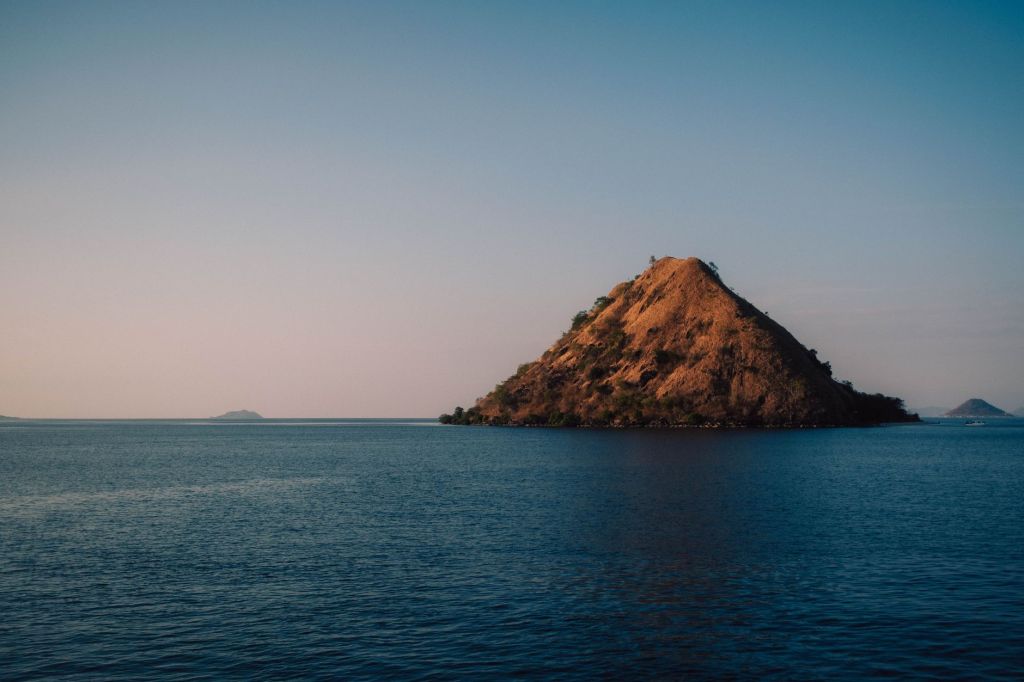
- Padar Island, Kabupaten Manggarai Barat, East Nusa Tenggara, Indonesia
- Labuan Bajo, Kabupaten Manggarai Barat, East Nusa Tenggara, Indonesia
- Rinca Island, Kabupaten Manggarai Barat, East Nusa Tenggara, Indonesia
- Komodo Island, Kabupaten Manggarai Barat, East Nusa Tenggara, Indonesia
- Kalong Island, Kabupaten Manggarai Barat, East Nusa Tenggara, Indonesia
- Gili Lawa Darat Island, Kabupaten Manggarai Barat, East Nusa Tenggara, Indonesia
- Sebayur Kecil Island, Kabupaten Manggarai Barat, East Nusa Tenggara, Indonesia
QUICK GUIDE
Komodo National Park at a Glance
Best for: Liveaboards, Komodo dragons, snorkeling, diving and dramatic island scenery
Gateway: Labuan Bajo, Flores
How long to stay: Minimum 2 days / 1 night, ideally 3 days / 2 nights
Best first-time trip: 3-day / 2-night Komodo liveaboard
Best time to visit: April to October
Best viewpoint: Padar Island
Best wildlife experience: Komodo dragons on Rinca or Komodo Island
Best snorkeling experience: Manta Point
Best beach: Pink Beach
Best for divers: The Cauldron, Batu Bolong and northern Komodo
Main downside: Boat trips can be expensive and the classic route gets busy
KOMODO EXPLAINED
Komodo National Park vs Komodo Island: What’s the Difference?
This confuses a lot of people before they visit. Komodo National Park is not the same thing as Komodo Island. Komodo Island is just one of the islands inside the national park.
The park includes Komodo, Rinca, Padar and many smaller islands, together with the surrounding sea. Most travelers do not stay on Komodo Island. You fly into Labuan Bajo on Flores and explore the national park by boat.
HOW LONG TO STAY
How Many Days Do You Need in Komodo National Park?
1-day speedboat = best for limited time
Shared 3D2N liveaboard = best for most first visits
Private charter = best for flexibility/groups
Dive liveaboard = best for serious divers
1 Day in Komodo
A one-day Komodo speedboat tour works if you are very short on time.
Typical routes try to cover several famous stops such as Padar, Pink Beach, a dragon trek and Manta Point. You will see a lot. You will also spend much of the day moving. I would choose this only if adding an overnight boat trip genuinely isn’t possible.
2 Days / 1 Night in Komodo
This is the minimum I would recommend if you want to actually sleep among the islands.
A 2D1N trip gives you considerably more atmosphere than returning to Labuan Bajo the same afternoon and can include several of the classic sights.
3 Days / 2 Nights in Komodo
This is what I would recommend for most first-time visitors. Three days gives you enough time for Padar Island, Komodo dragons, Pink Beach, manta snorkeling and smaller stops without every activity feeling like a pit stop. Current multi-day Komodo itineraries commonly combine these attractions across 3D2N trips.
4 to 5 Days in Komodo
Go longer if you want:
- More snorkeling
- More diving
- Quieter islands
- Sunrise and sunset hikes
- Less rigid timing
- A private charter
Around a Week
A week makes sense if Komodo is a major part of your trip rather than one short stop.
We had roughly this amount of time with MAJ Oceanic and could go well beyond the standard circuit, with watersports, diving, slower anchorages and private beach evenings.
HOW TO VISIT
How To Get To Komodo National Park
Step 1: Fly to Labuan Bajo
For most travelers, the easiest route is to fly into Komodo Airport in Labuan Bajo.
Direct domestic flights connect Labuan Bajo with major Indonesian cities, including Bali and Jakarta, though routes and airlines change, so always check current schedules when booking.
Step 2: Continue by Boat
Once you’re in Labuan Bajo, the national park is reached by boat.
Your options include:
- One-day speedboat
- Shared liveaboard
- Private charter
- Dive boat
- Dive liveaboard
There is no road to Padar. Your Grab driver cannot help you here.
Can You Visit Komodo From Bali?
Yes. But Komodo is not a normal Bali day trip. Fly from Bali to Labuan Bajo, then start your Komodo boat trip from there.
If you’re building a larger Bali and Indonesia route, my 2-Week Bali Itinerary and 3-Week Indonesia Itinerary will help you decide where Komodo fits.
THINGS TO DO
Best Things to Do in Komodo National Park
1. Take a Komodo Liveaboard
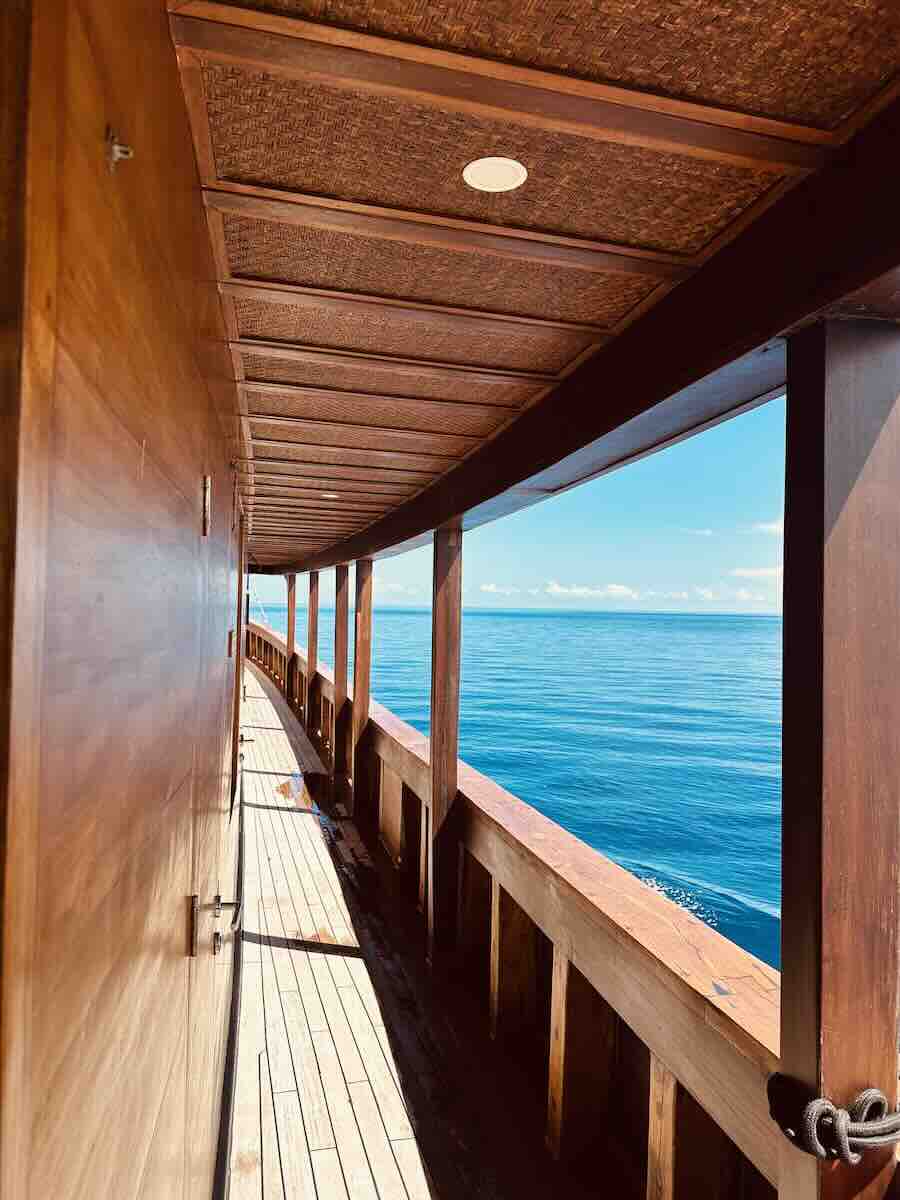
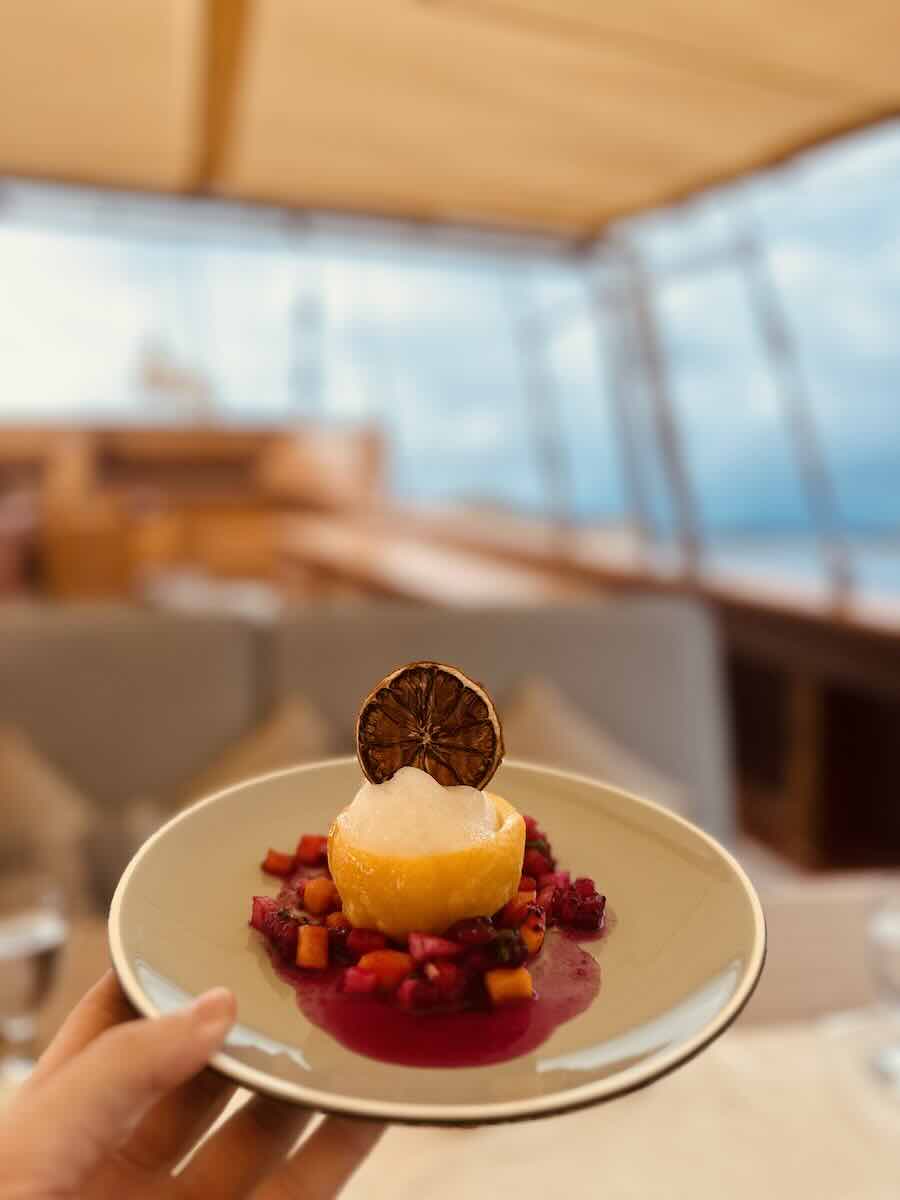
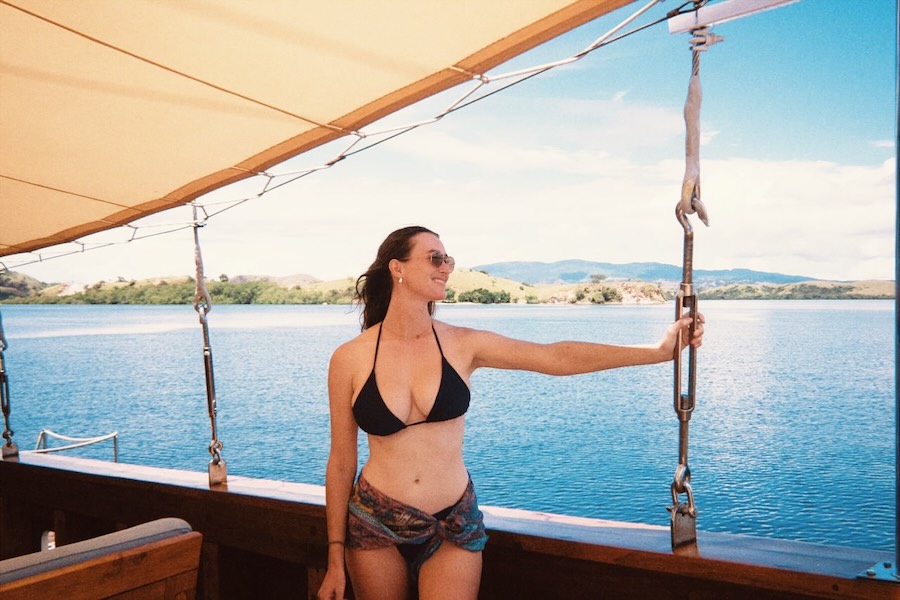
We explored Komodo with MAJ Oceanic, a traditional two-masted Phinisi yacht with resort-style suites and a strong focus on private, customised voyages. Their current charter model includes bespoke dining and private experiences rather than a fixed backpacker-style group route.
This was obviously a completely different experience from joining a budget shared boat. We had more flexibility, more privacy and enough time to include watersports and slower days between the main sightseeing stops.
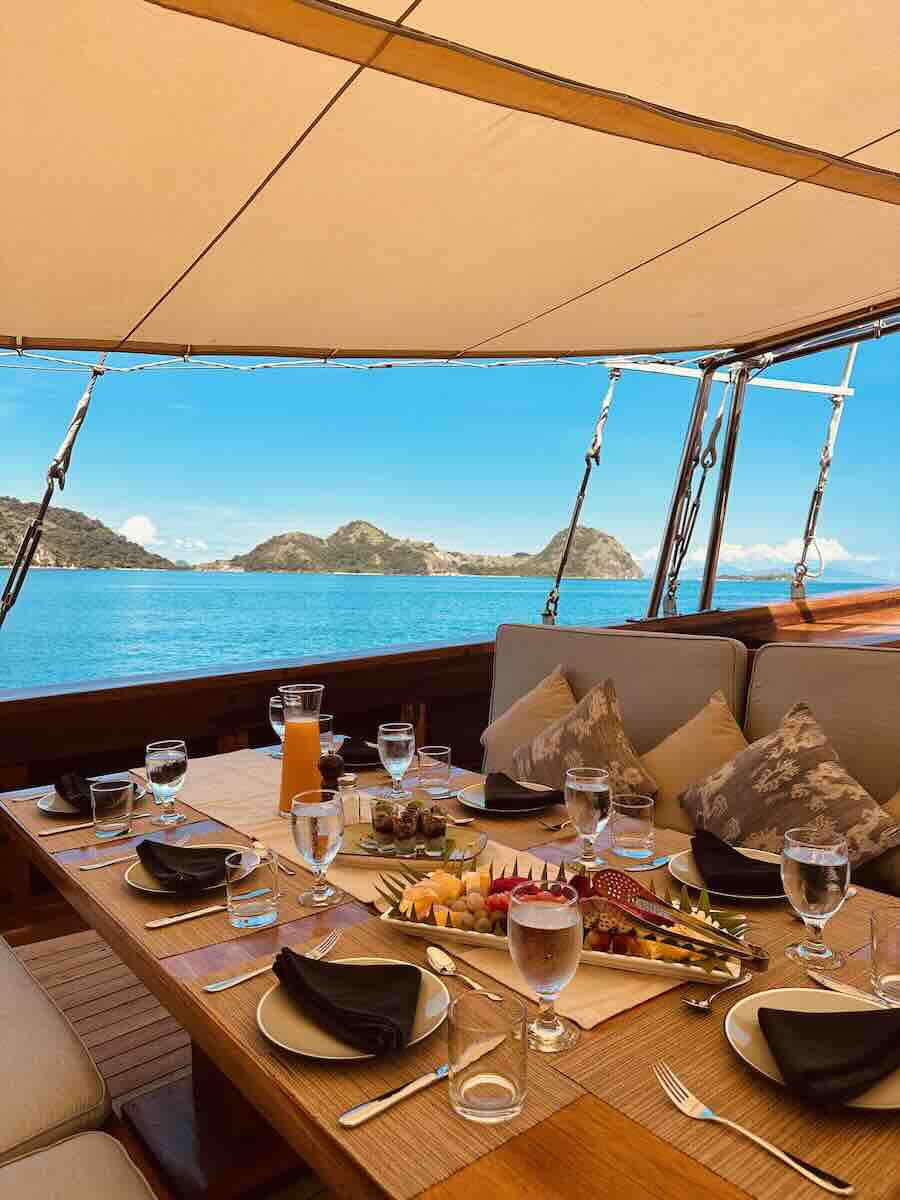
A liveaboard lets you wake up between the islands, eat breakfast on deck, swim straight from the boat, snorkel over coral reefs, dive in world-class waters, and watch the sun drop behind those dry golden hills that make Komodo look completely unreal.
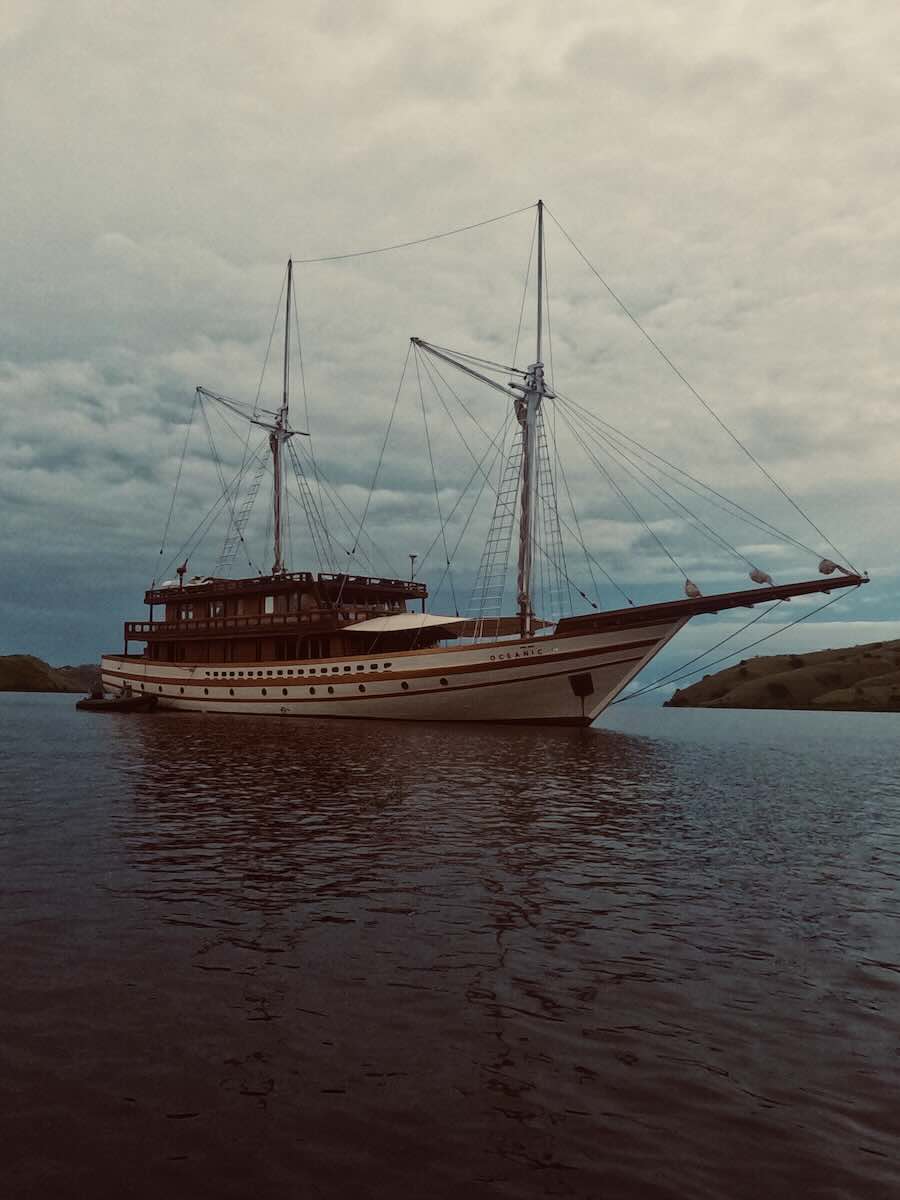
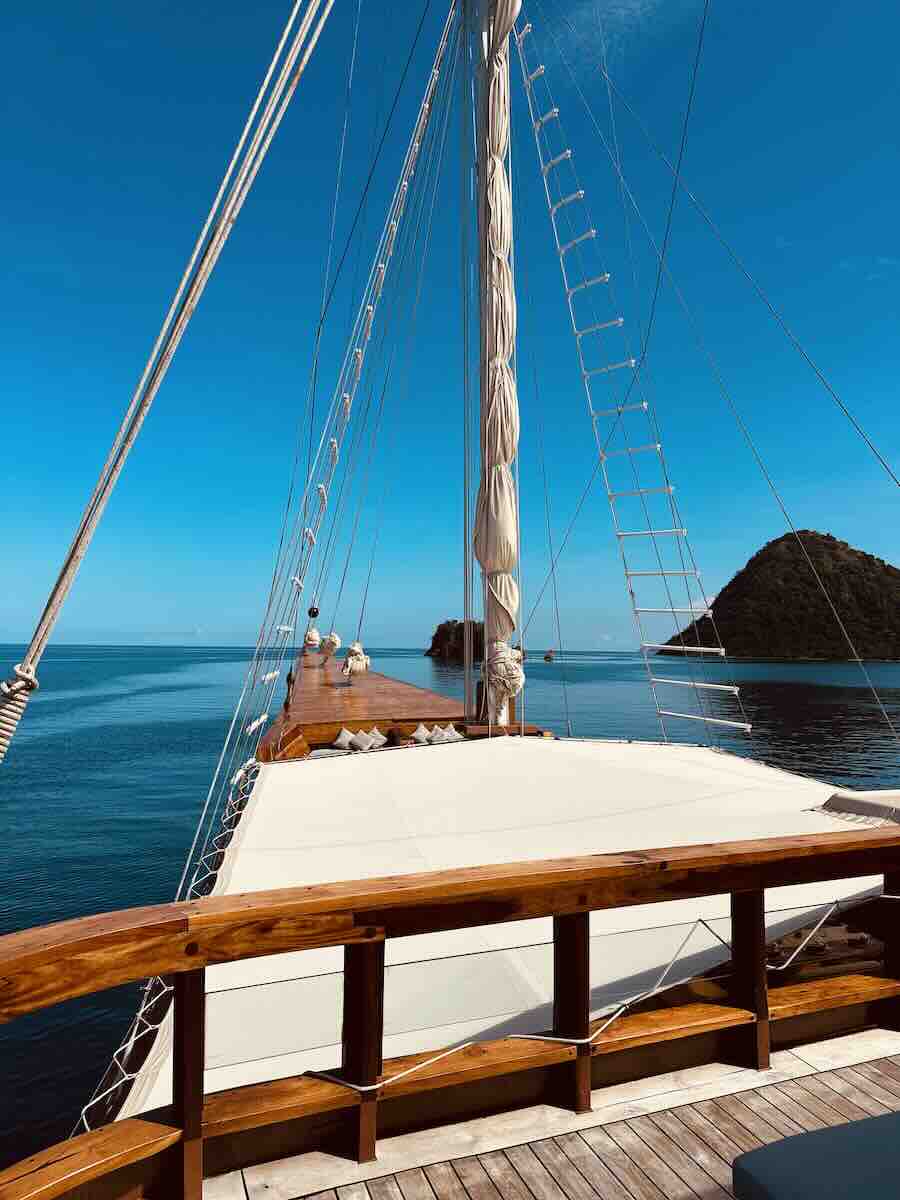
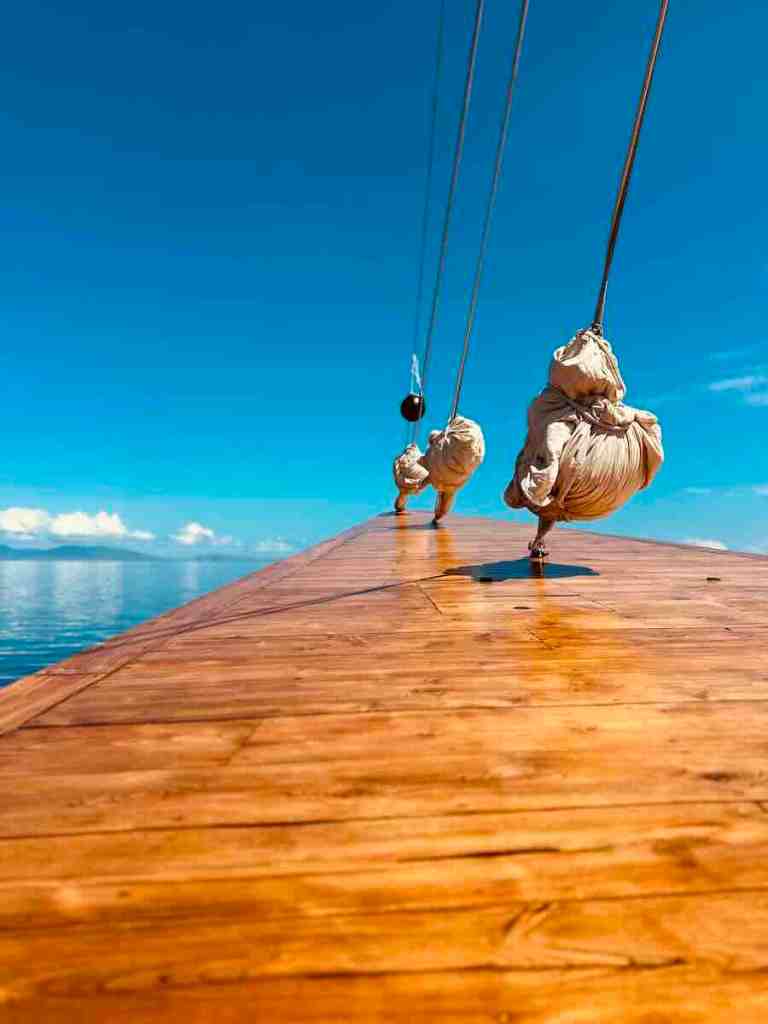
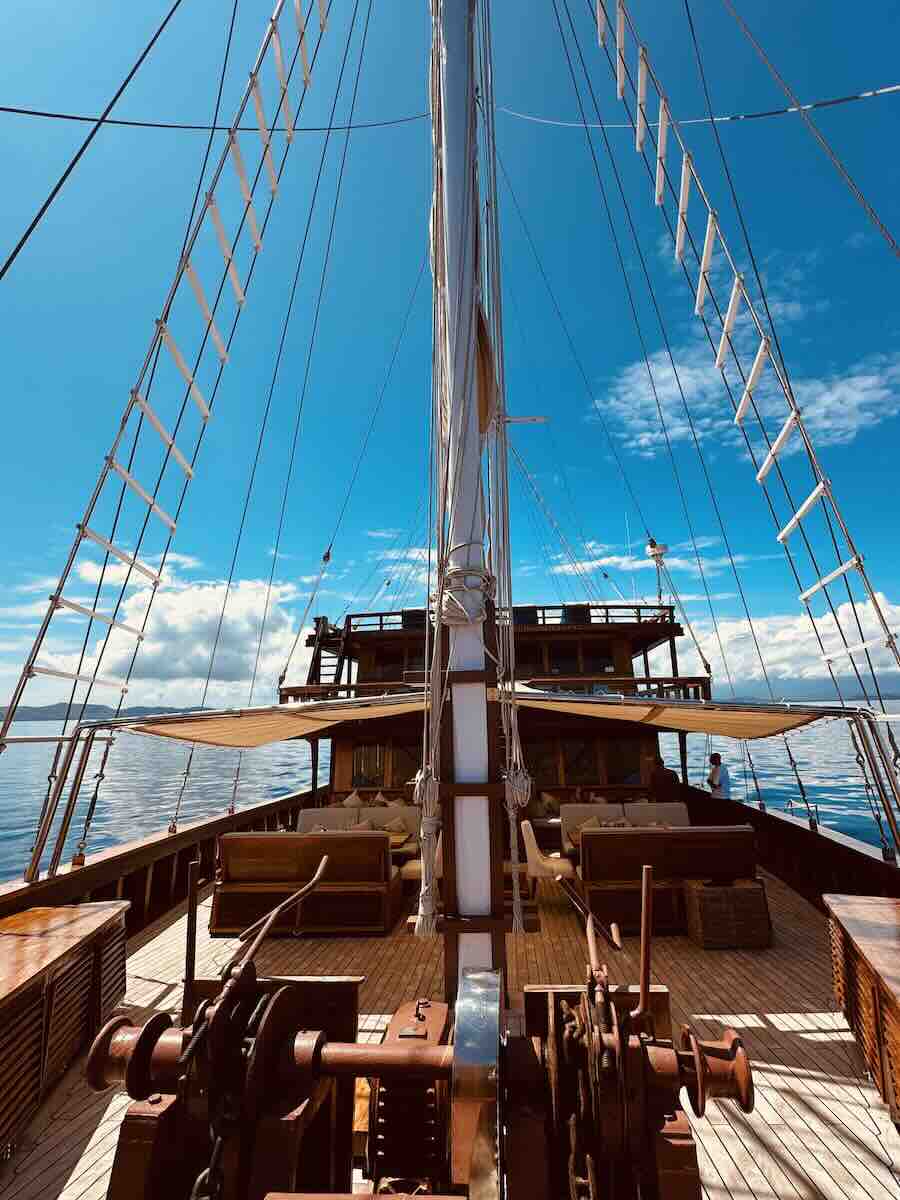
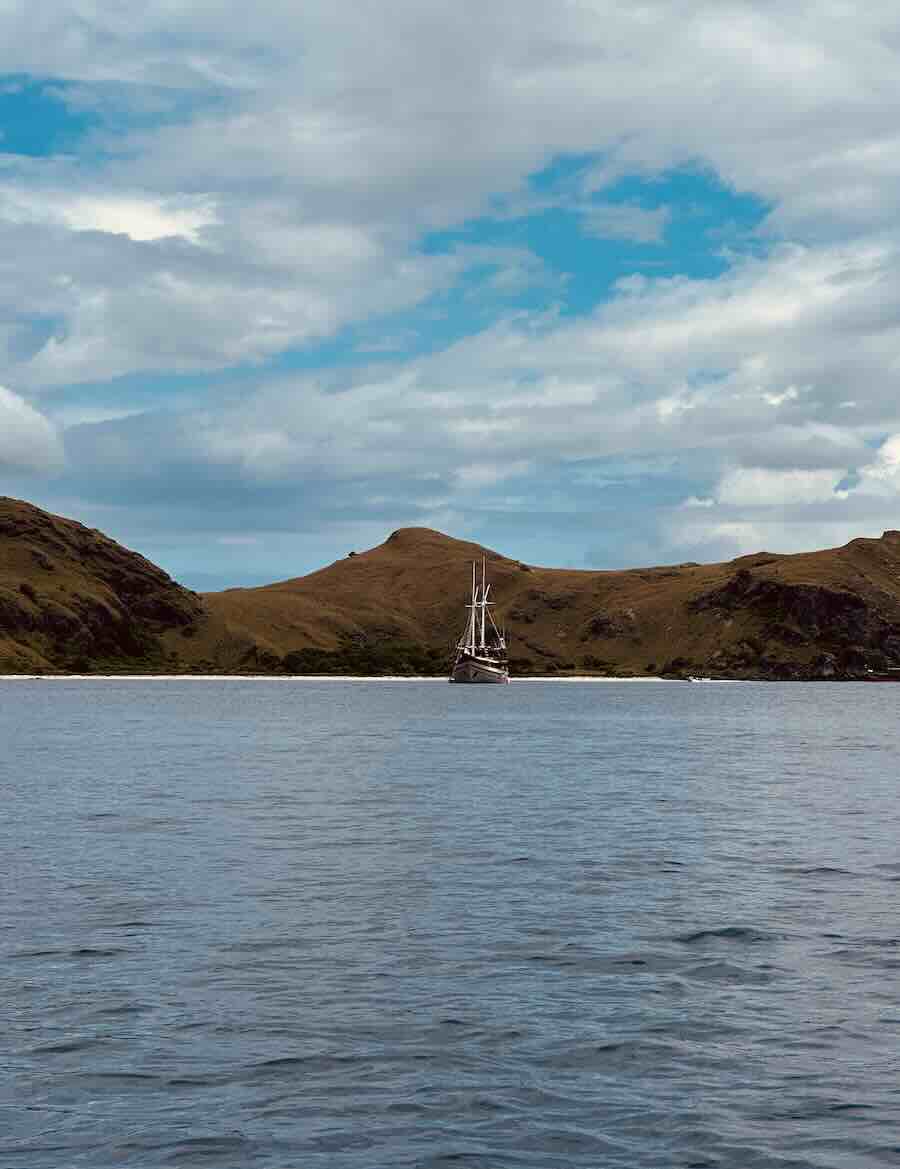
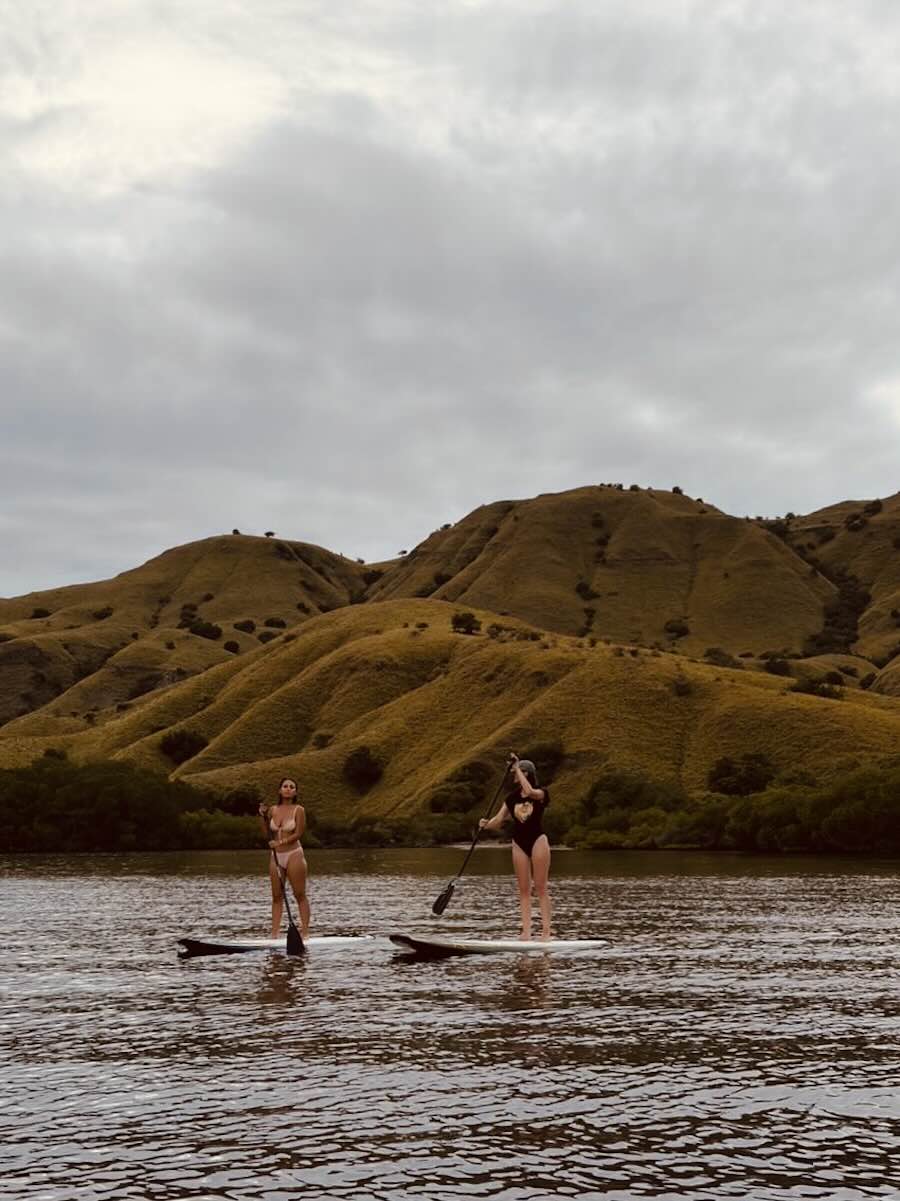
The boat trip included way more than just sailing from island to island. We went snorkeling, diving, wakeboarding, paddleboarding, kayaking, jet skiing, swimming off the boat, and even tried boat golf, which is exactly as ridiculous and fun as it sounds. These extra activities are what make a longer Komodo boat trip feel so different from a rushed day tour. You are not just visiting Komodo. You are actually living on the water for a few days.
Price:
Komodo liveaboard prices vary a lot depending on the boat, cabin type, route, season, number of guests, and whether it is a shared trip or private charter. MAJ Oceanic costs around $14,000 per night for the boat, which makes it a luxury private charter option rather than a budget backpacker boat. Shared Komodo liveaboards and shorter group trips are much cheaper, but they come with less privacy, less flexibility, and a more fixed route.

2. Hike Padar Island
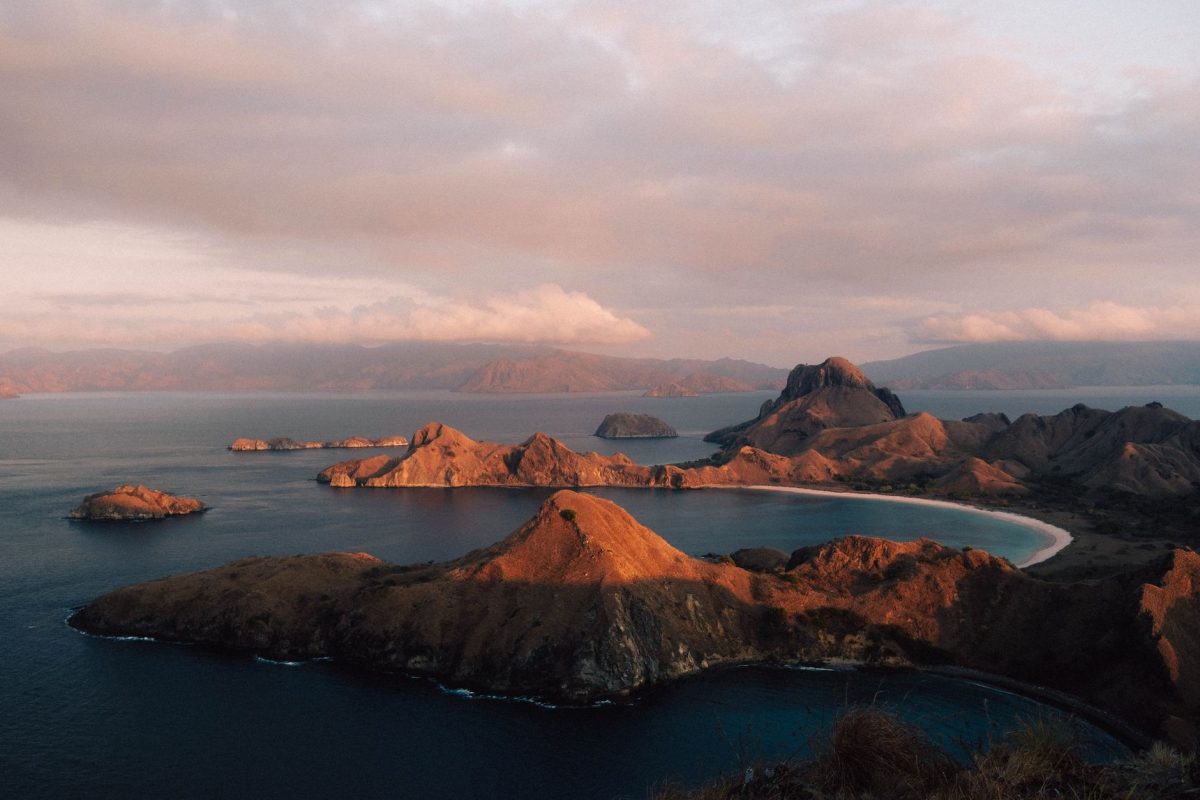
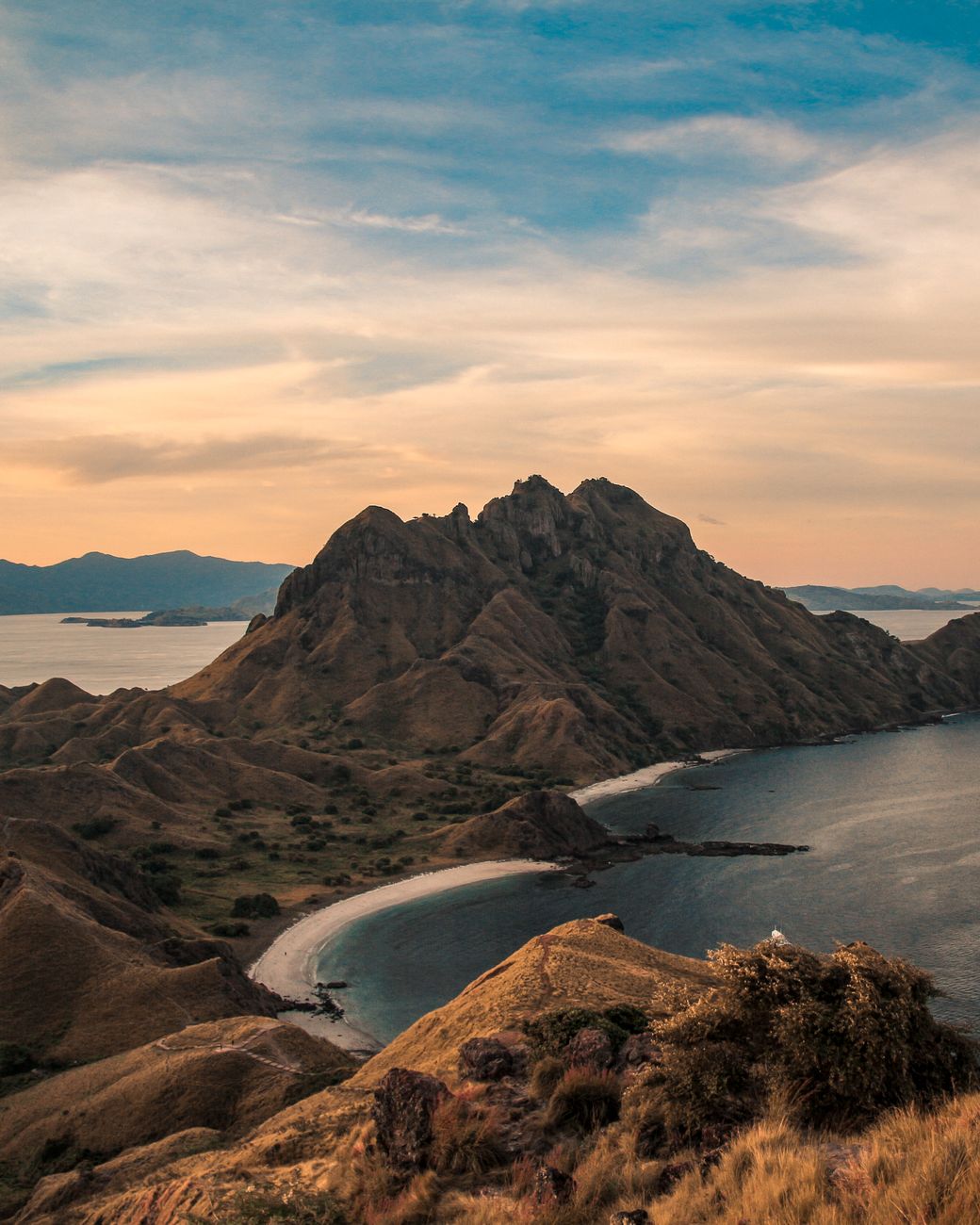
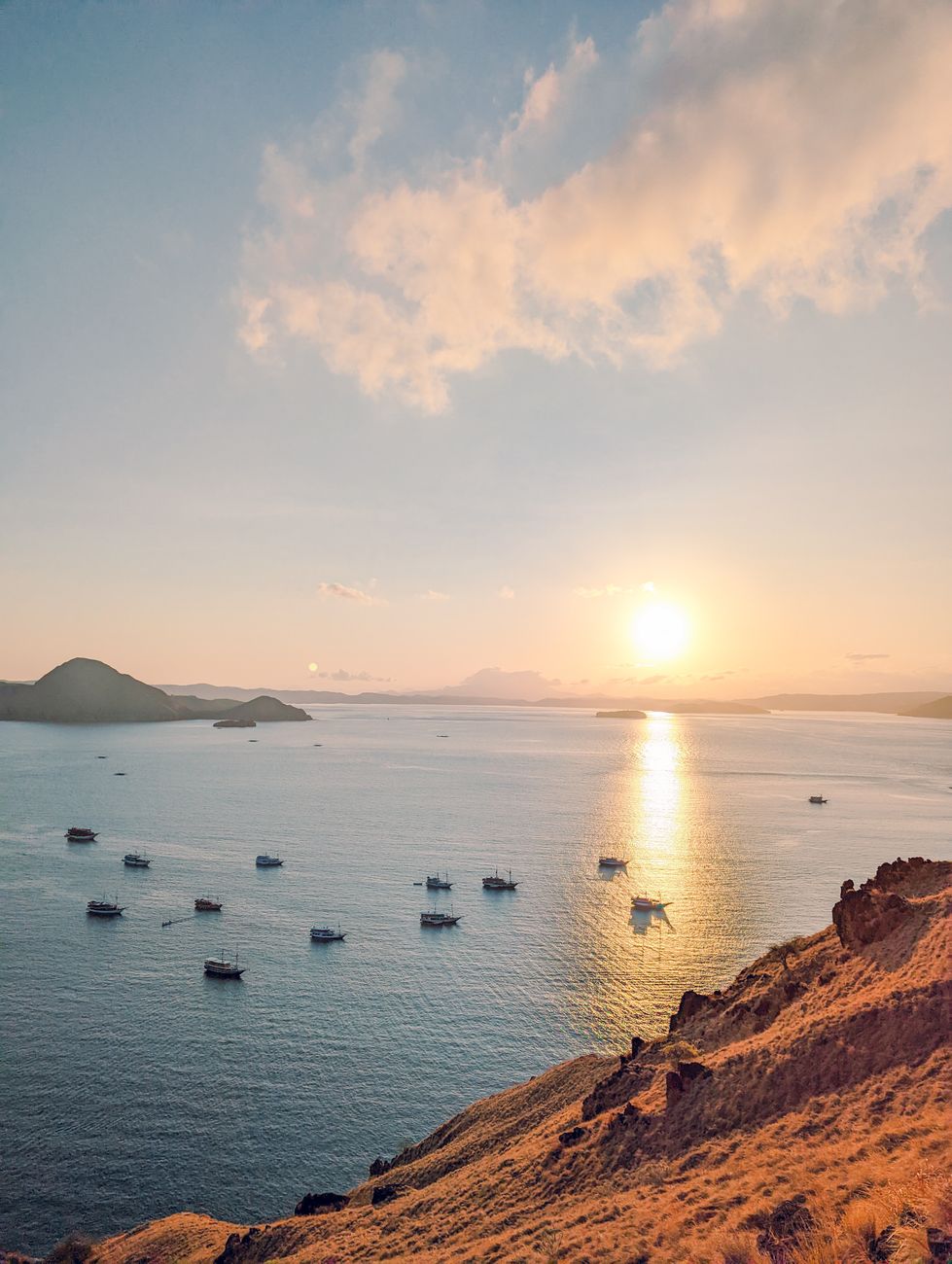
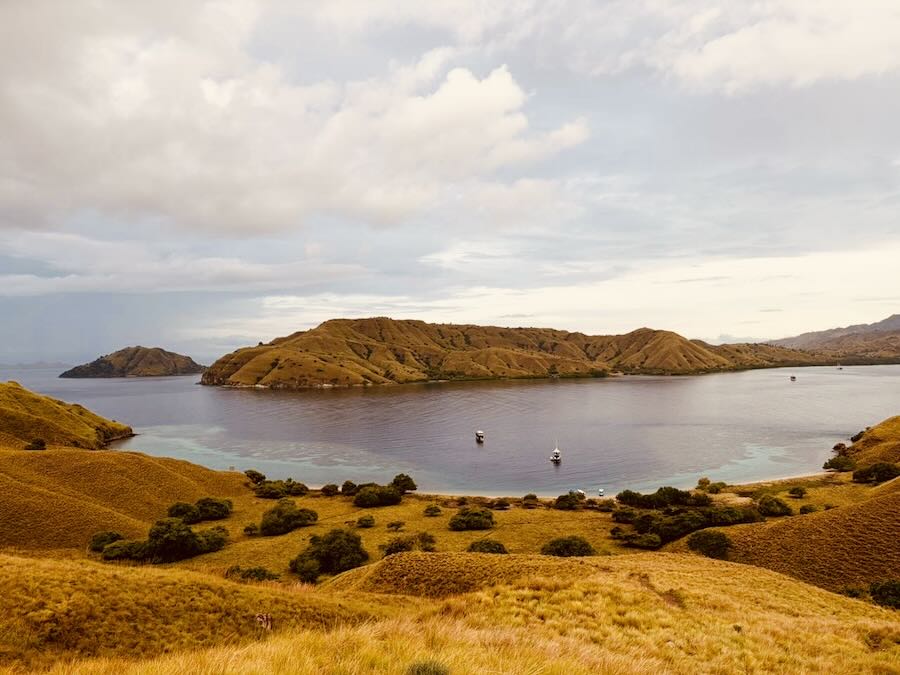
If you have seen one photo of Komodo National Park, there is a fairly high chance it was taken from Padar Island. And, the hype is justified. The viewpoint looks across several curved bays separated by dry rugged hills, with white, darker and pinkish beaches appearing around the coastline.
The climb follows a developed trail with stairs and exposed sections. It isn’t technically difficult, but it can become brutally hot because there is very little shade.
Go early in the morning if your boat route allows it. Bring water, wear shoes with decent grip and accept that your thighs may send you a formal complaint halfway up.
Indonesia’s official tourism information also recommends appropriate footwear for the Padar route. Read the official Padar Island guide here.
Best for: Views, photography, sunrise and hiking
Time needed: Roughly 1 to 2 hours depending on pace and crowds
Pair with: Pink Beach, Komodo Island, Manta Point or Taka Makassar
3. See Komodo Dragons on Rinca or Komodo Island
Yes, they really are enormous.
Seeing a Komodo dragon in the wild feels very different from seeing one behind glass. They are prehistoric-looking, powerful and surprisingly easy to underestimate when they’re lying around doing absolutely nothing.
Until they aren’t.
Visitors see dragons on Komodo Island or Rinca Island, accompanied by park rangers. Official Indonesian tourism information describes ranger-led treks on both islands and advises visitors to keep a safe distance.
We visited Loh Buaya on Rinca Island during our boat trip.
Rinca is one of the main dragon-viewing areas and is easily incorporated into many Komodo itineraries. The official Indonesia Travel guide to Rinca Island has more background on the island and wildlife.
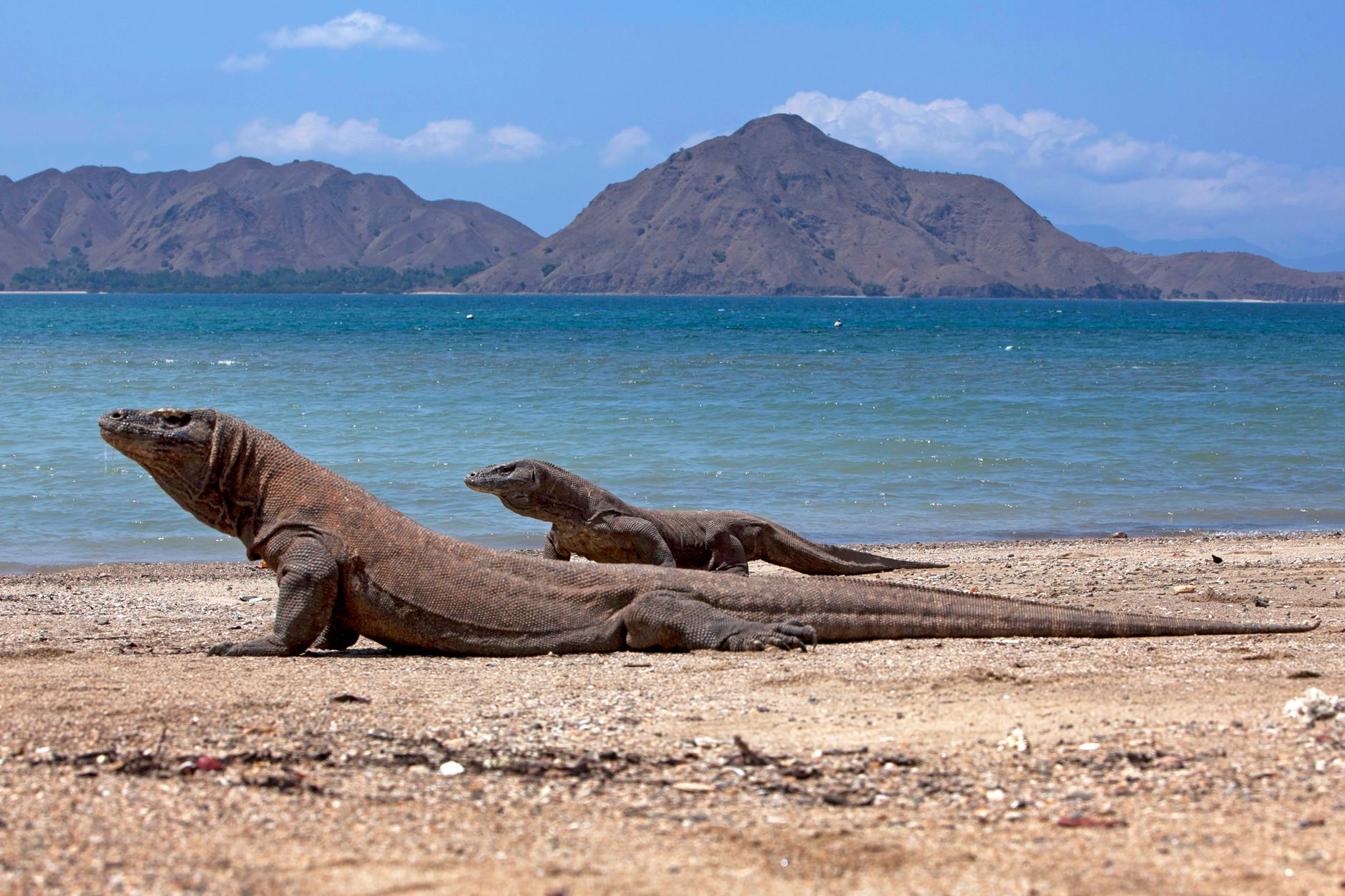
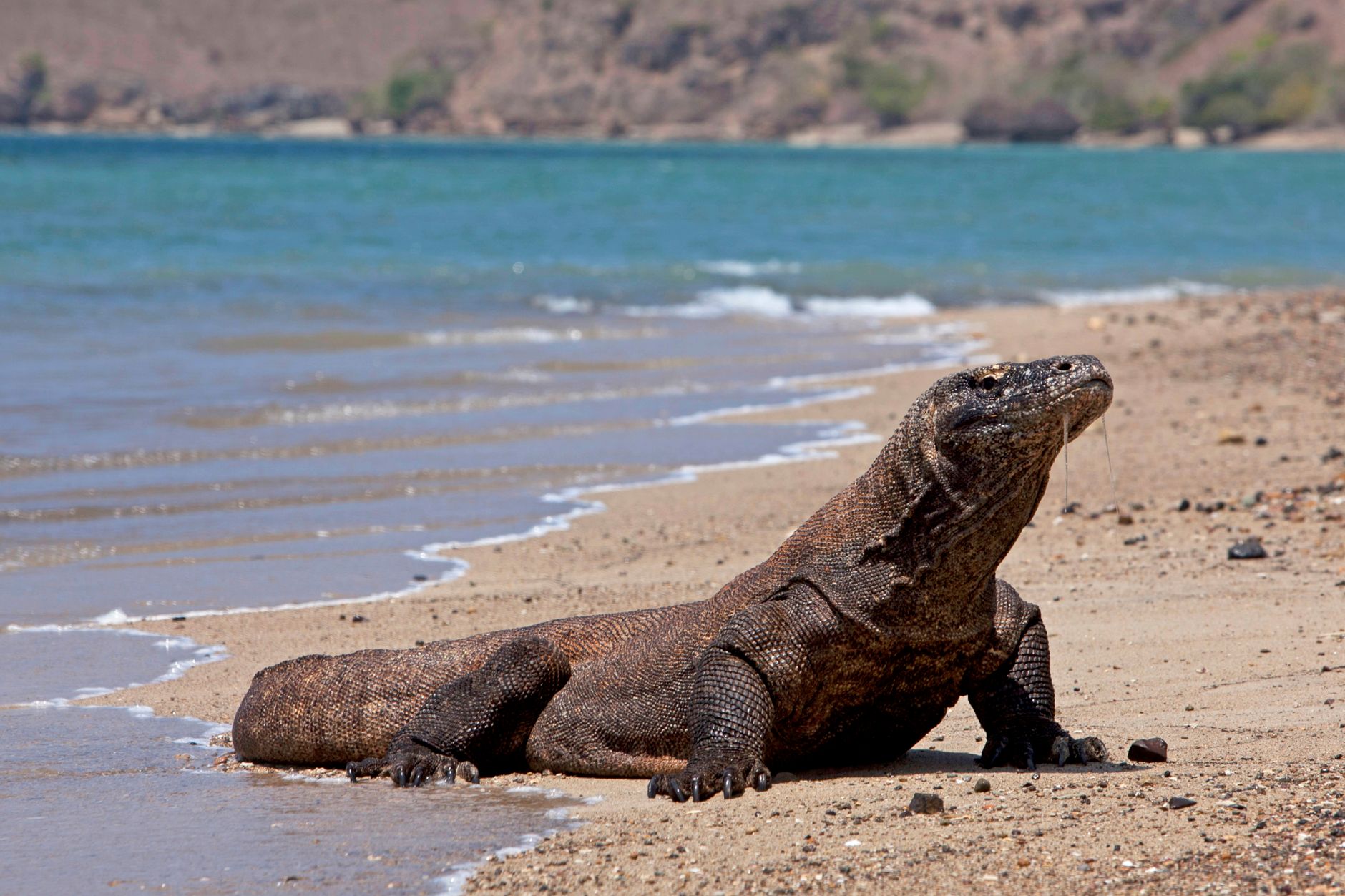
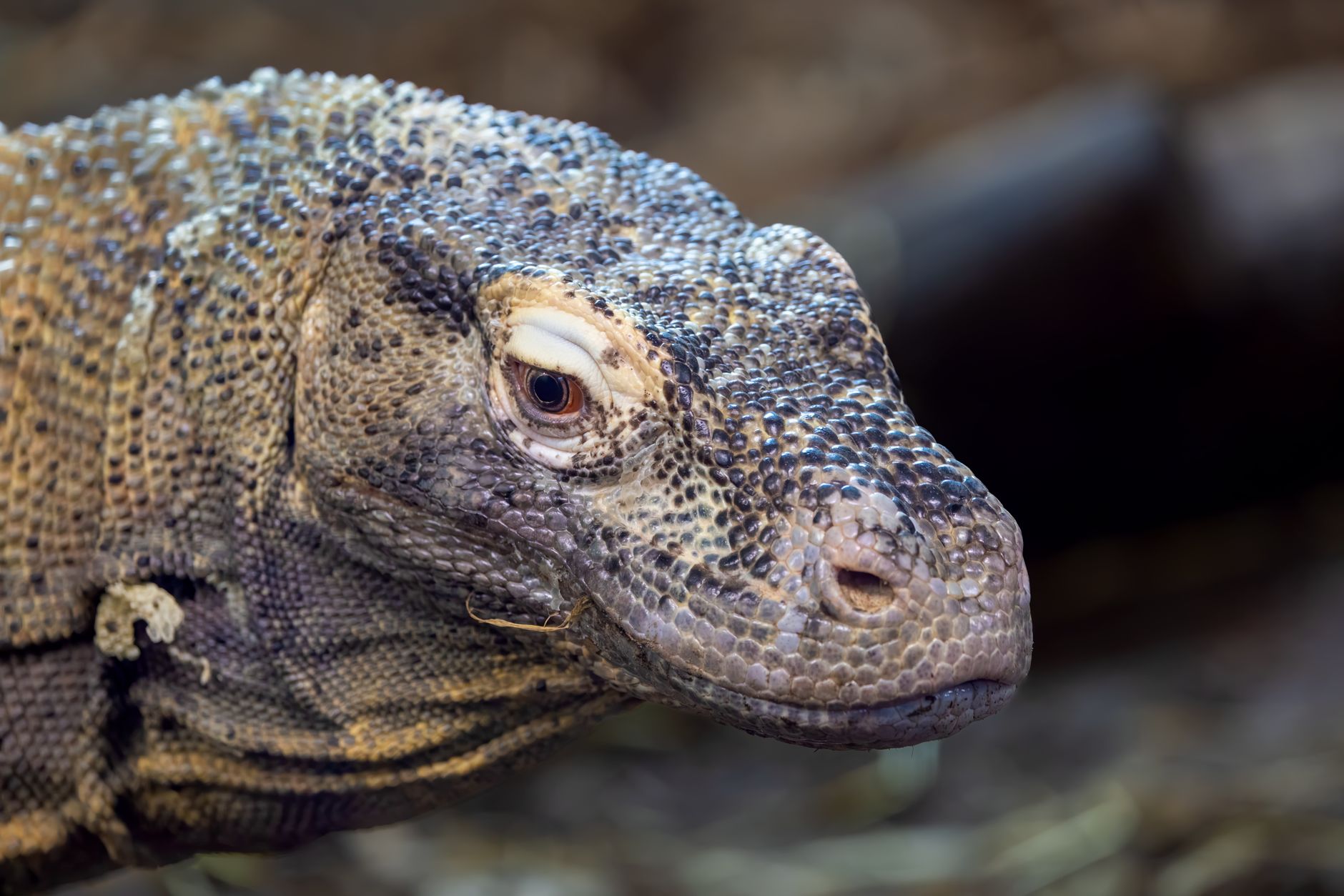
Safety: Listen to your ranger. Keep your distance. Don’t wander away from the group. And please don’t become the person edging closer because your phone camera apparently needs to see the dragon’s pores.
Best for: Wildlife and nature
Time needed: Usually 1 to 3 hours depending on the trek
Pair with: Padar, Pink Beach or Kalong Island
4. Snorkel With Manta Rays
This was easily one of the experiences I was most excited about.
Manta rays move through the water with such ridiculous grace that you suddenly become extremely aware of the fact you are essentially flapping around beside them wearing plastic fins.
Manta Point is one of the best-known manta areas inside Komodo National Park.
Sightings are never guaranteed.
Some days are incredible. Other days the mantas apparently have plans elsewhere.
The waters around Komodo can also have strong currents. Official Indonesian tourism information specifically warns that Komodo’s diving conditions can include powerful currents and whirlpools, so always follow the crew’s instructions before entering the water.
If you are not a strong swimmer, tell your guide. There is absolutely no glory in pretending you’re comfortable in open water while internally negotiating with every deity you’ve ever heard of.
Best for: Manta rays, snorkeling and marine life
Time needed: Usually part of a half-day or full-day boat route
Pair with: Taka Makassar
5. Visit Pink Beach
Pink Beach looks almost suspiciously tropical.
The sand gets its pink tone from reddish material associated with the coral environment mixing with pale sand along the shoreline. Indonesia’s official tourism site explains the role of microscopic organisms called foraminifera in producing the red pigment associated with the coral. Read the official Pink Beach guide here.
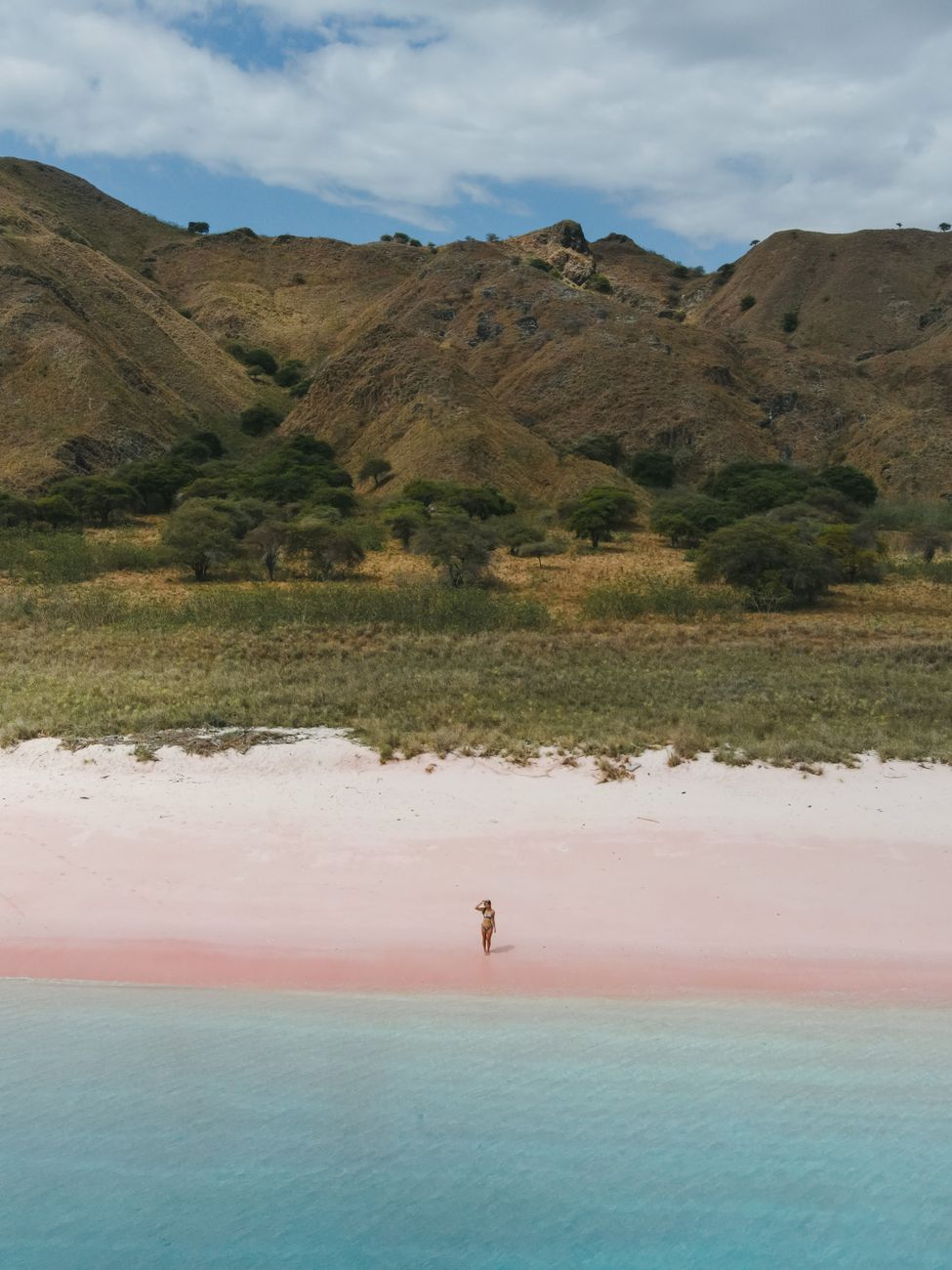
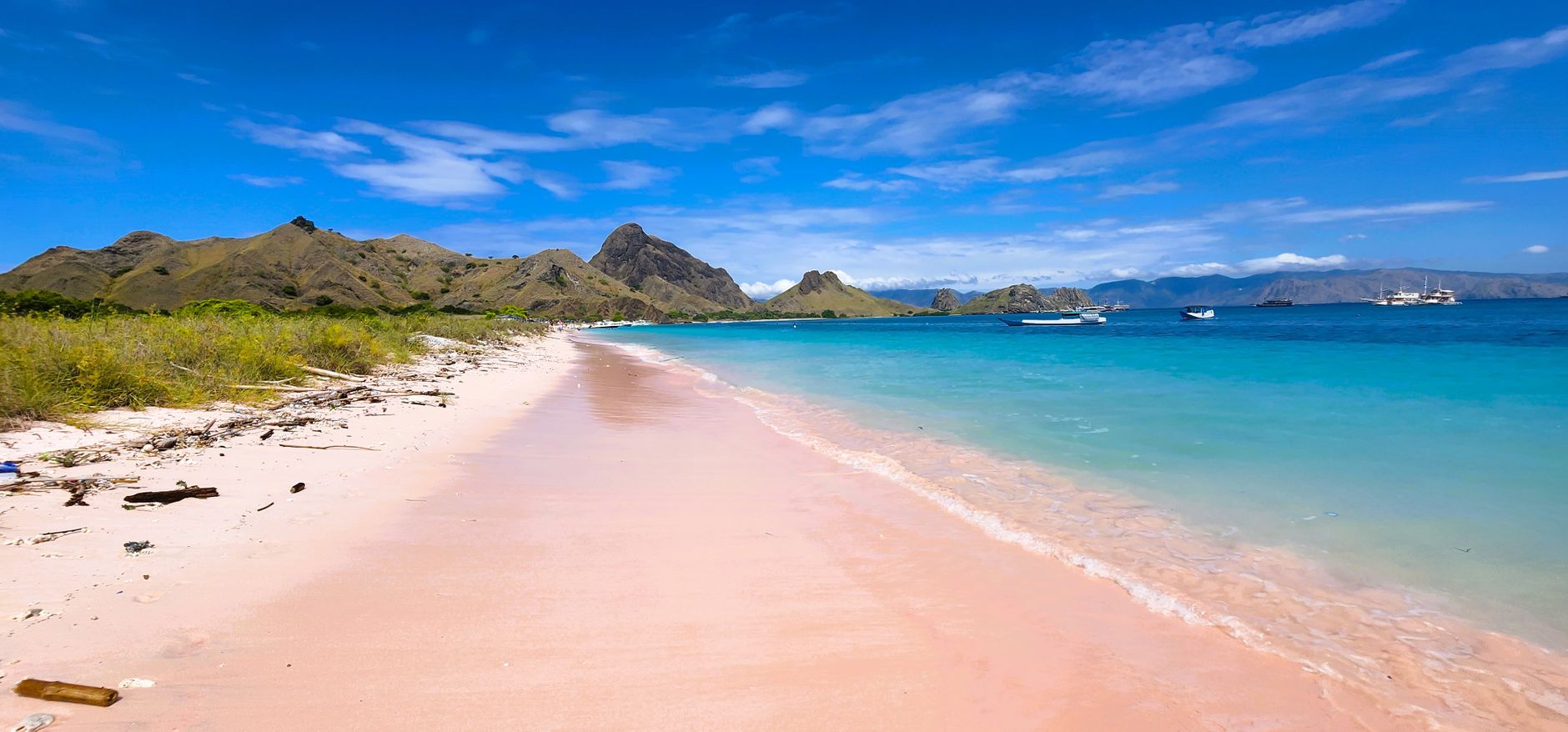
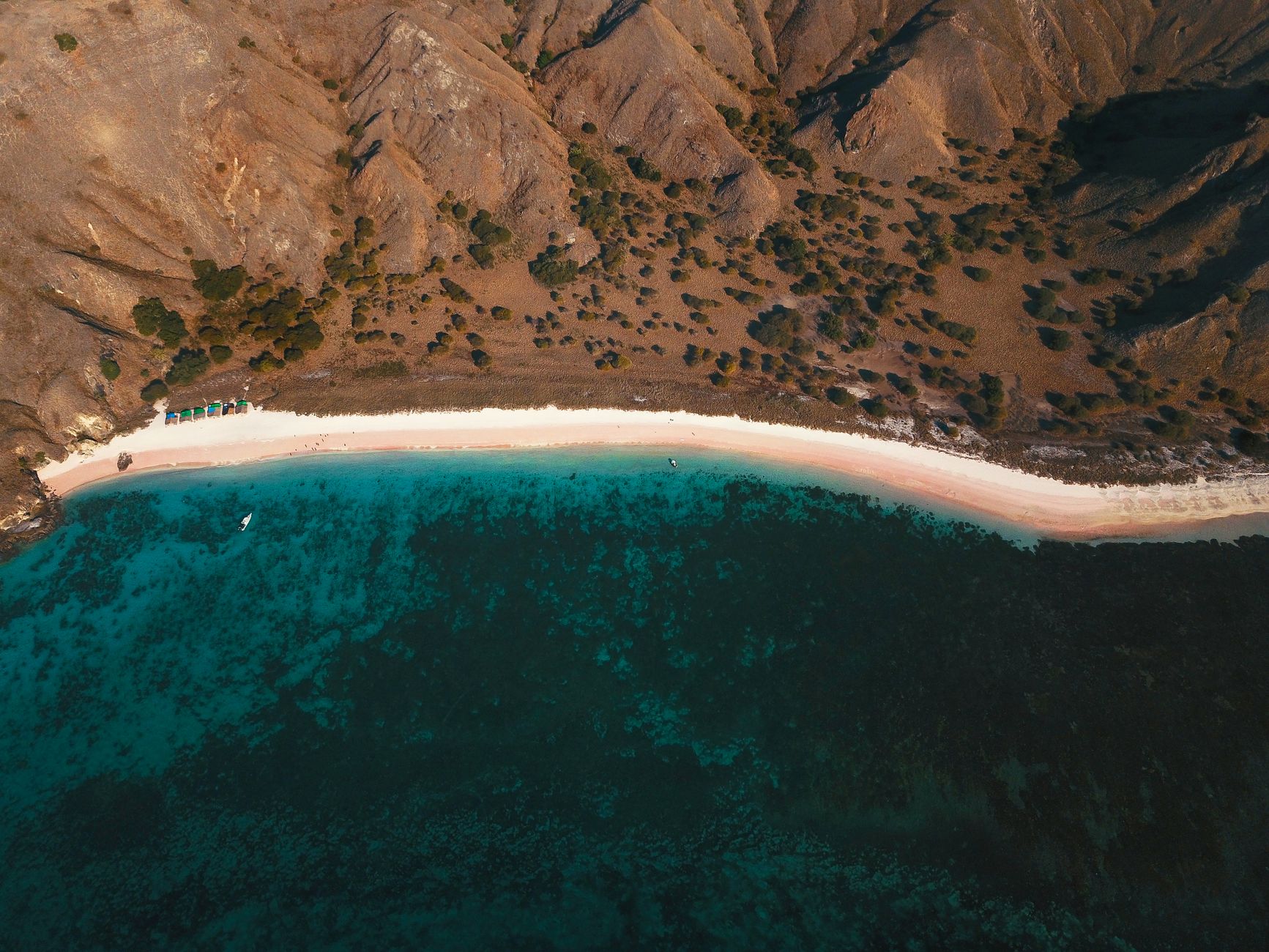
It isn’t just somewhere to take a photo. The water around Pink Beach is also popular for snorkeling, with coral and tropical fish close to shore. Come for the bizarre pink sand. Stay because the water is gorgeous. And do not take handfuls of sand home in a bottle. The beach is pink precisely because the pink bits are still there.
Best for: Beach time, snorkeling and photography
Time needed: 1 to 2 hours
Pair with: Padar or a dragon trek
6. Walk Across Taka Makassar
Taka Makassar is a tiny pale sandbar surrounded by shallow turquoise water. It looks almost comically small from above. There is not an enormous list of activities here. That is the point. Swim. Walk along the sand. Get back in the water.
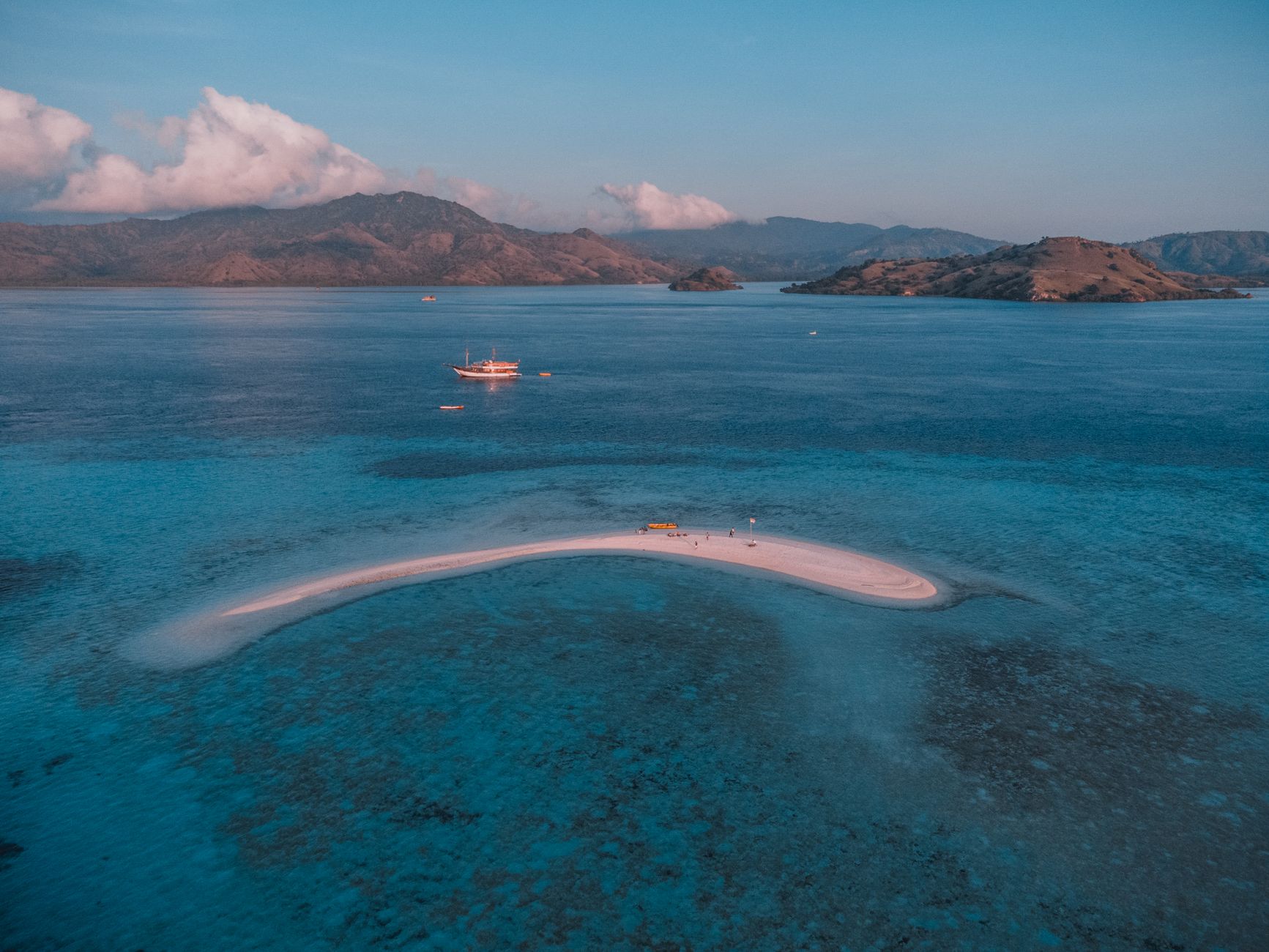
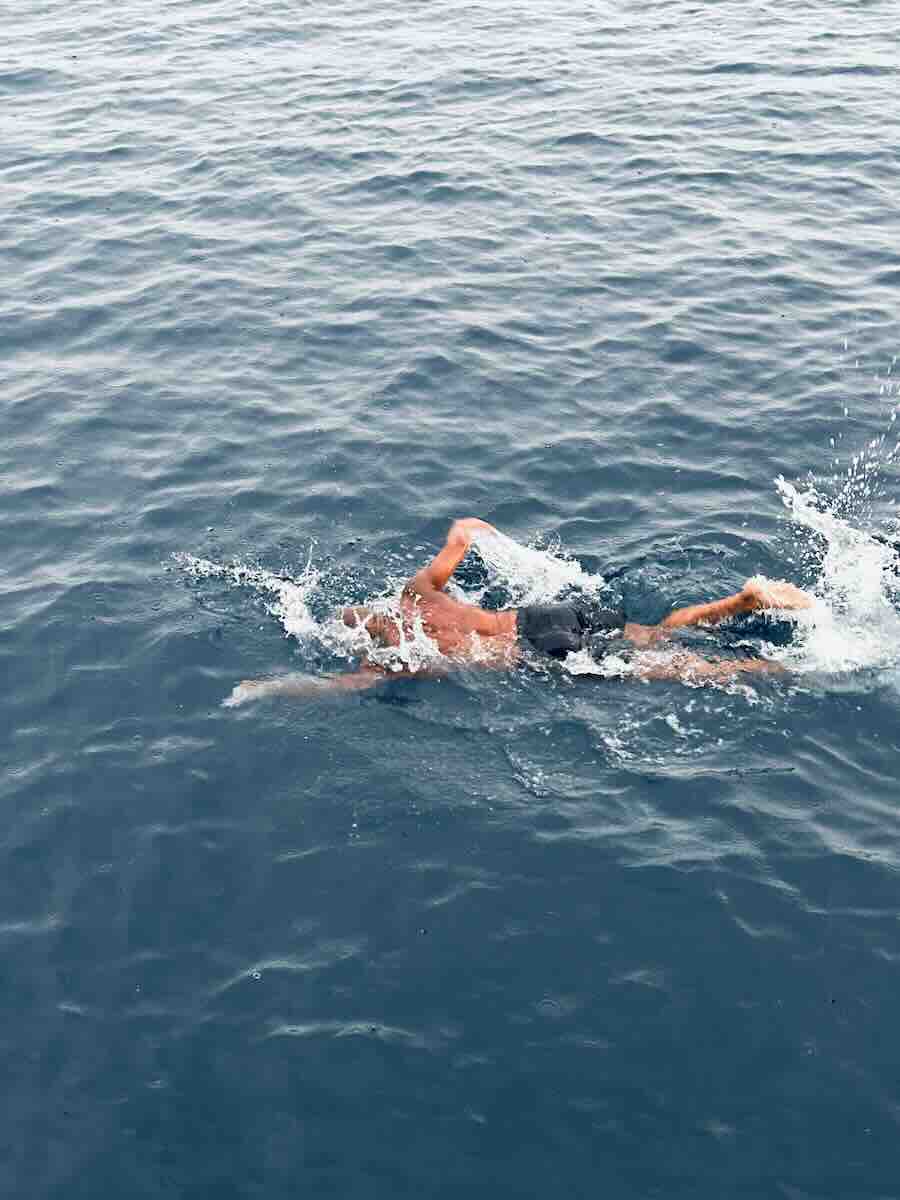

Taka Makassar is commonly combined with Manta Point, which makes perfect sense because the two stops give you one relaxed beach moment and one proper wildlife experience. Current official Indonesia Travel sample routes pair both locations on multi-day Komodo itineraries.
There is virtually no shade, so don’t arrive looking like you are preparing for an afternoon under a palm tree.
Best for: Sandbar scenery, swimming and drone views
Time needed: Around 30 minutes to 1 hour
Pair with: Manta Point
7. Watch the Flying Foxes at Kalong Island
Kalong Island becomes interesting at sunset.
Thousands of flying foxes leave the mangroves as the light starts dropping and stream across the sky above the boats. It is one of those activities where you basically do nothing. Which I strongly support after several days of climbing hills and jumping into the ocean.
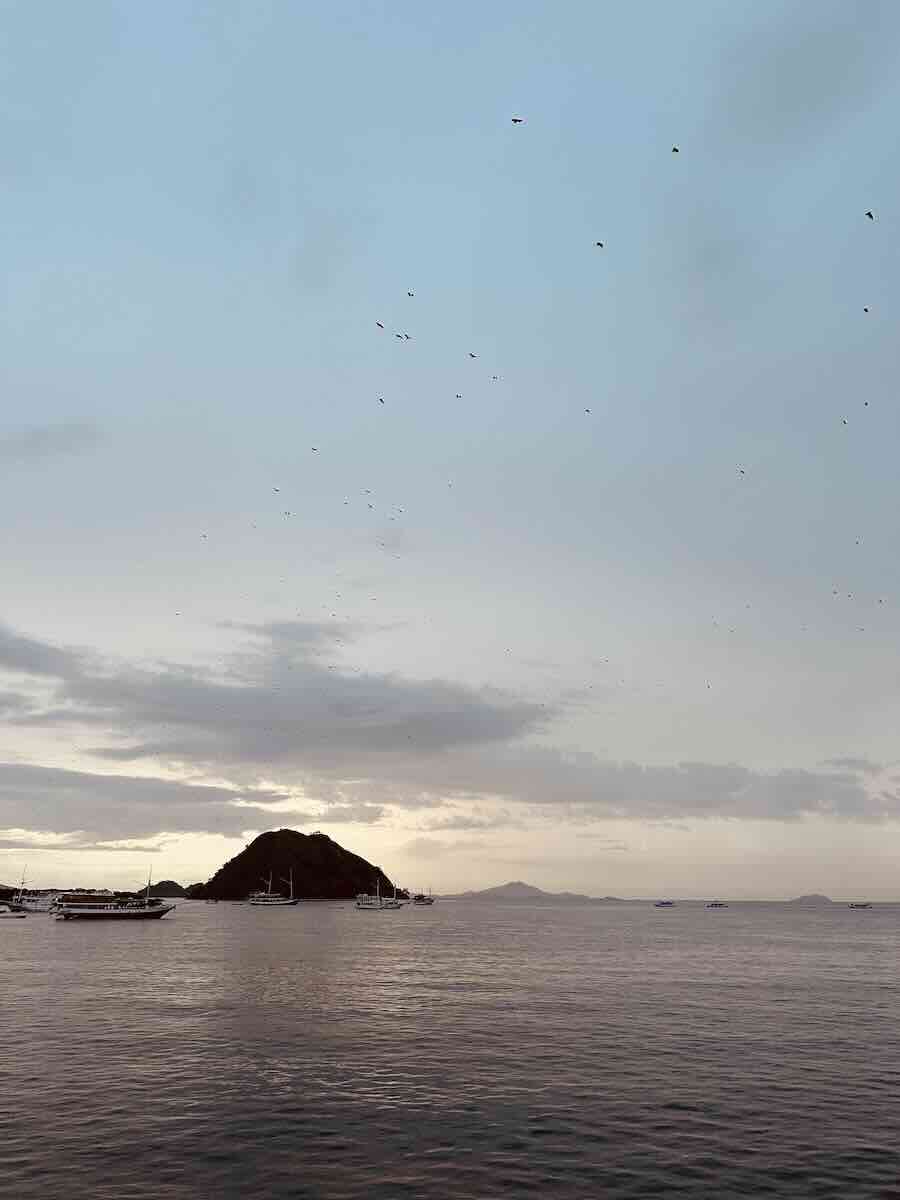
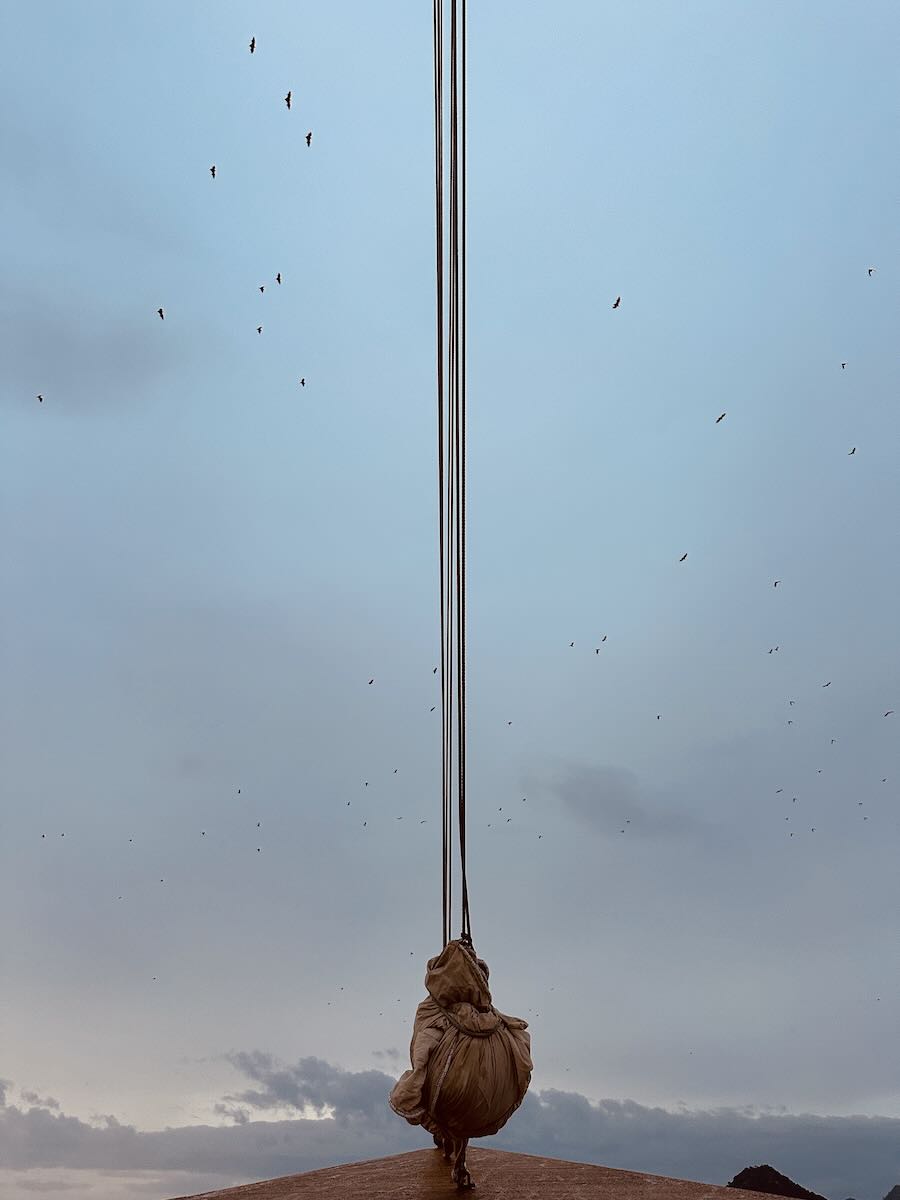
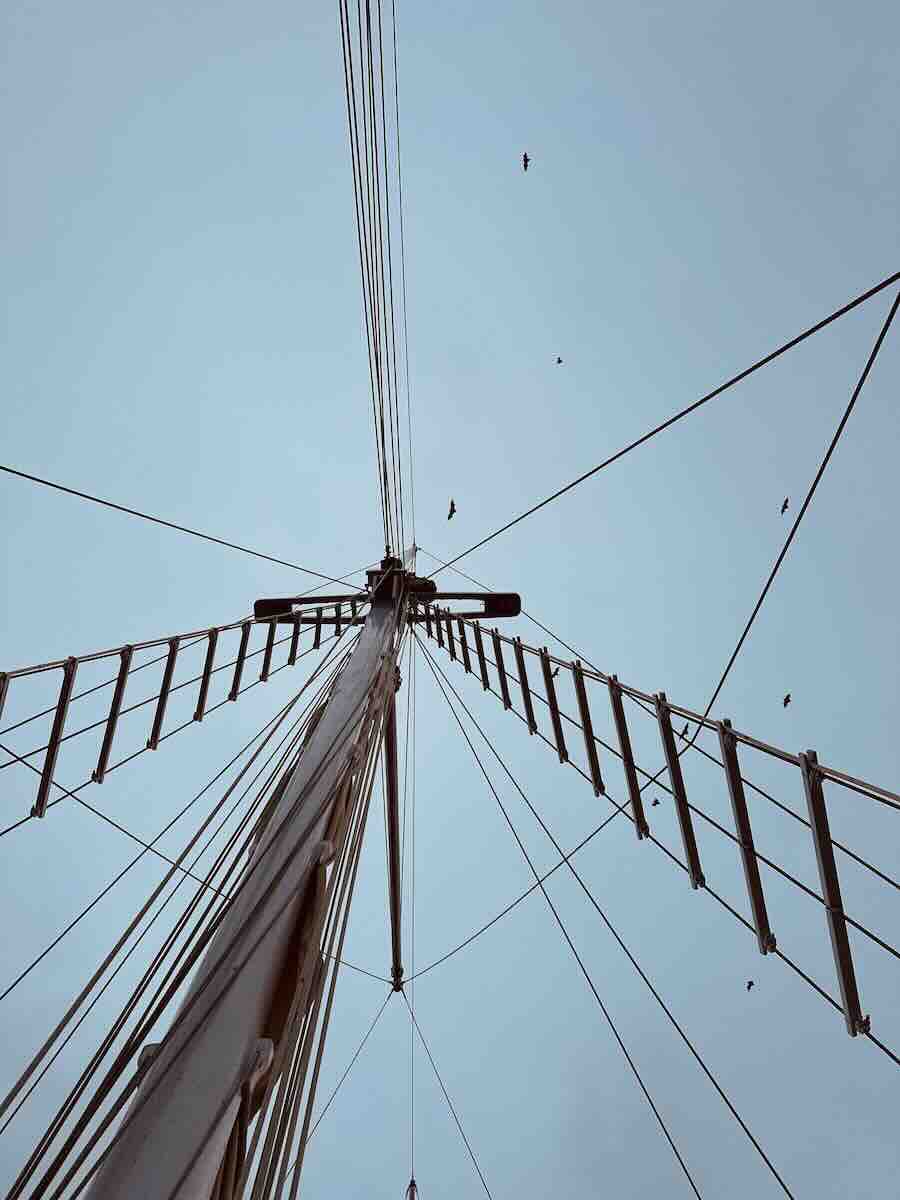

The Indonesian tourism authority also lists Kalong as one of Komodo’s established sunset wildlife experiences.
Have a drink on deck and look up. Not every activity requires suffering.
Best for: Sunset and wildlife
Time needed: Evening stop
Pair with: Rinca or a multi-day liveaboard
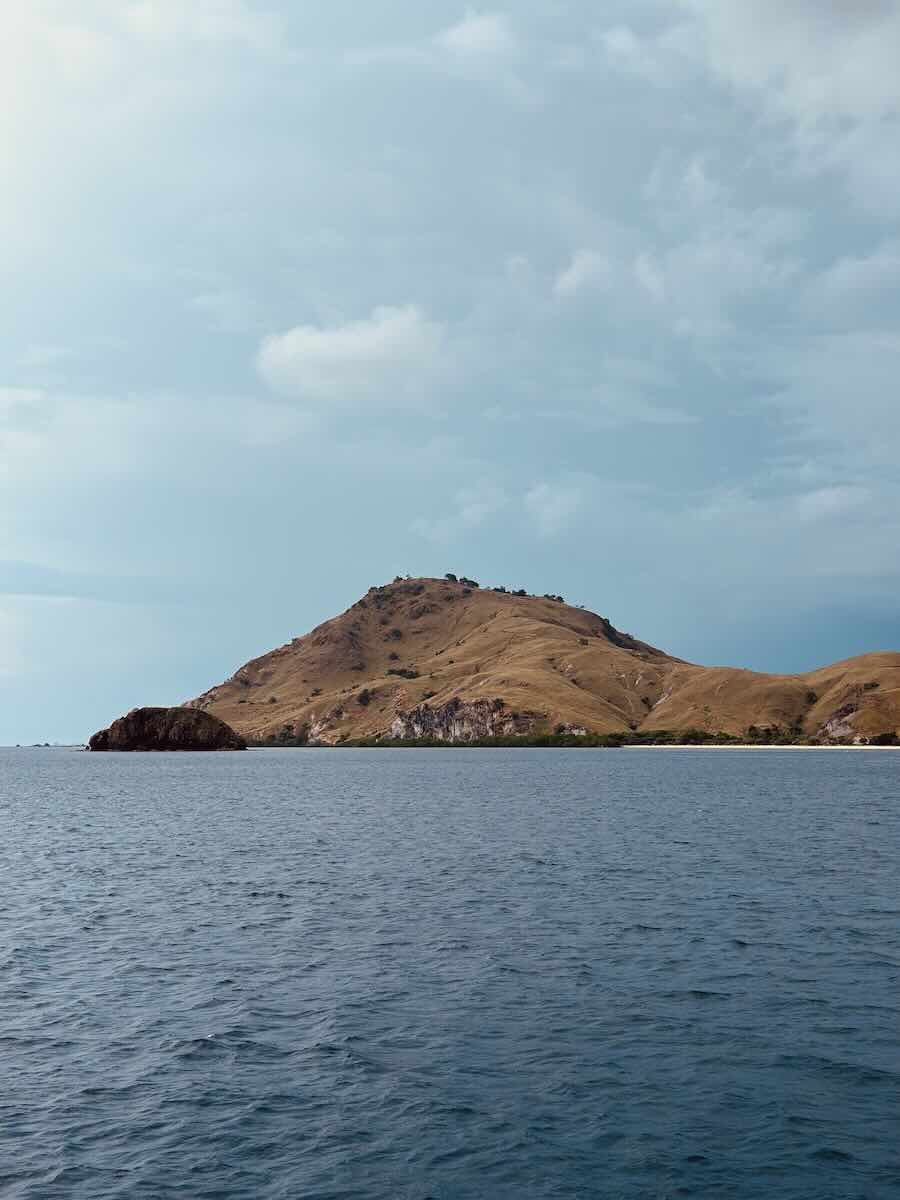
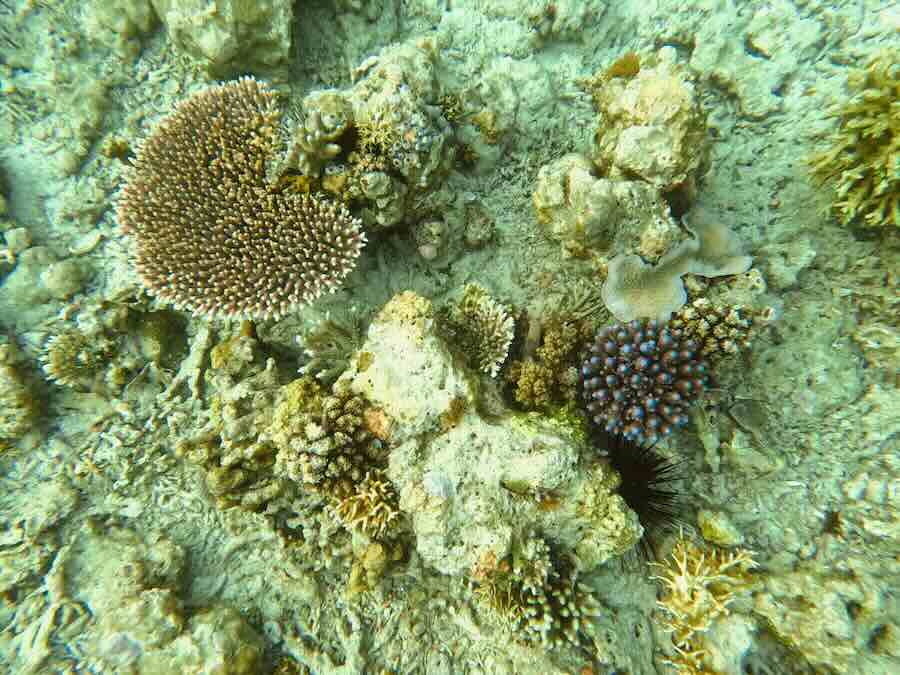
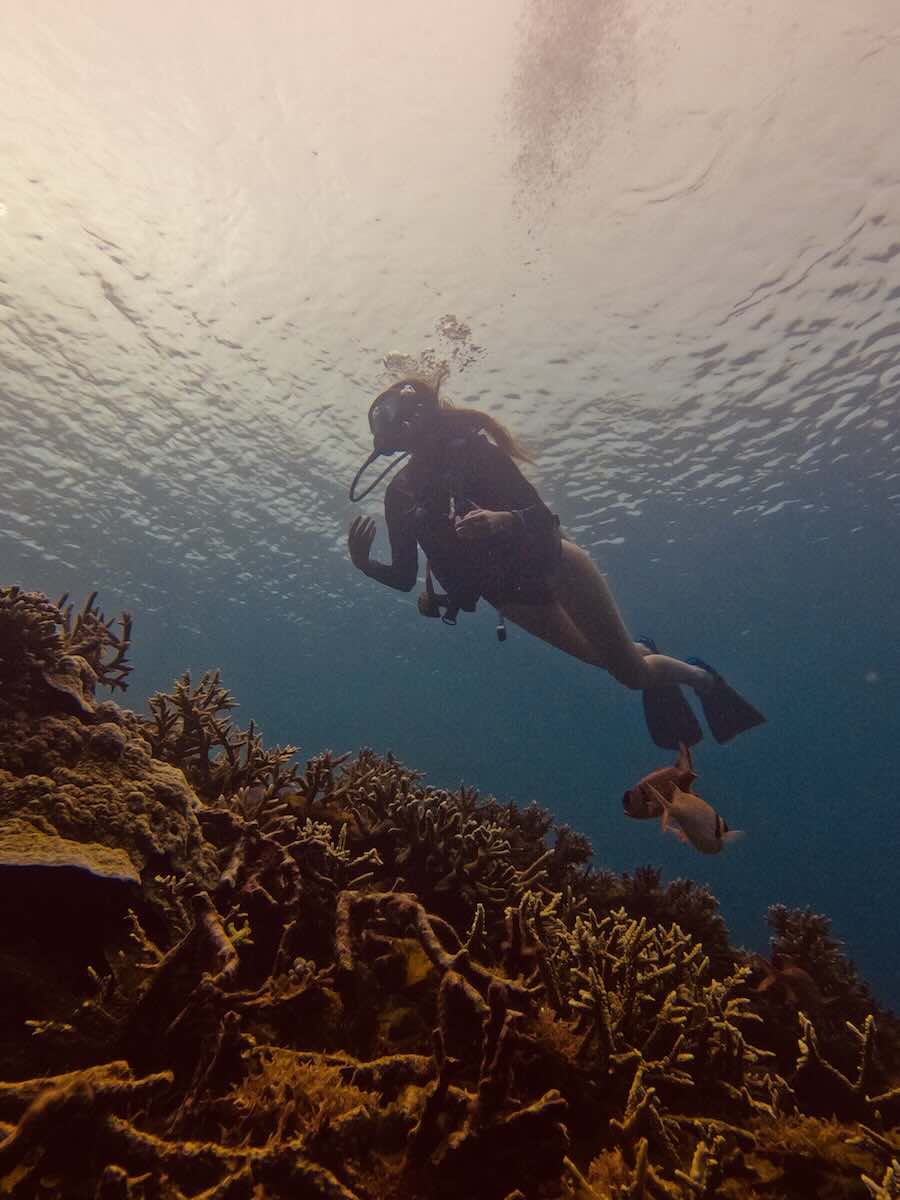
8. Snorkel or Dive Around Sebayur
Sebayur is a good place to ease into Komodo’s underwater world.
We used it as an early snorkel/check-dive stop, which is particularly useful before progressing toward some of the more current-heavy sites. The area has reefs, fish and beautifully clear water when conditions cooperate. If you’re diving, it is also a good moment to make sure your equipment is behaving before heading anywhere more technical. No one wants to discover their mask has developed a personality problem halfway through a serious drift dive.
Best for: Snorkeling, check dives and reef life
Time needed: 1 to 2 hours
Pair with: Northern Komodo dive sites or a longer liveaboard
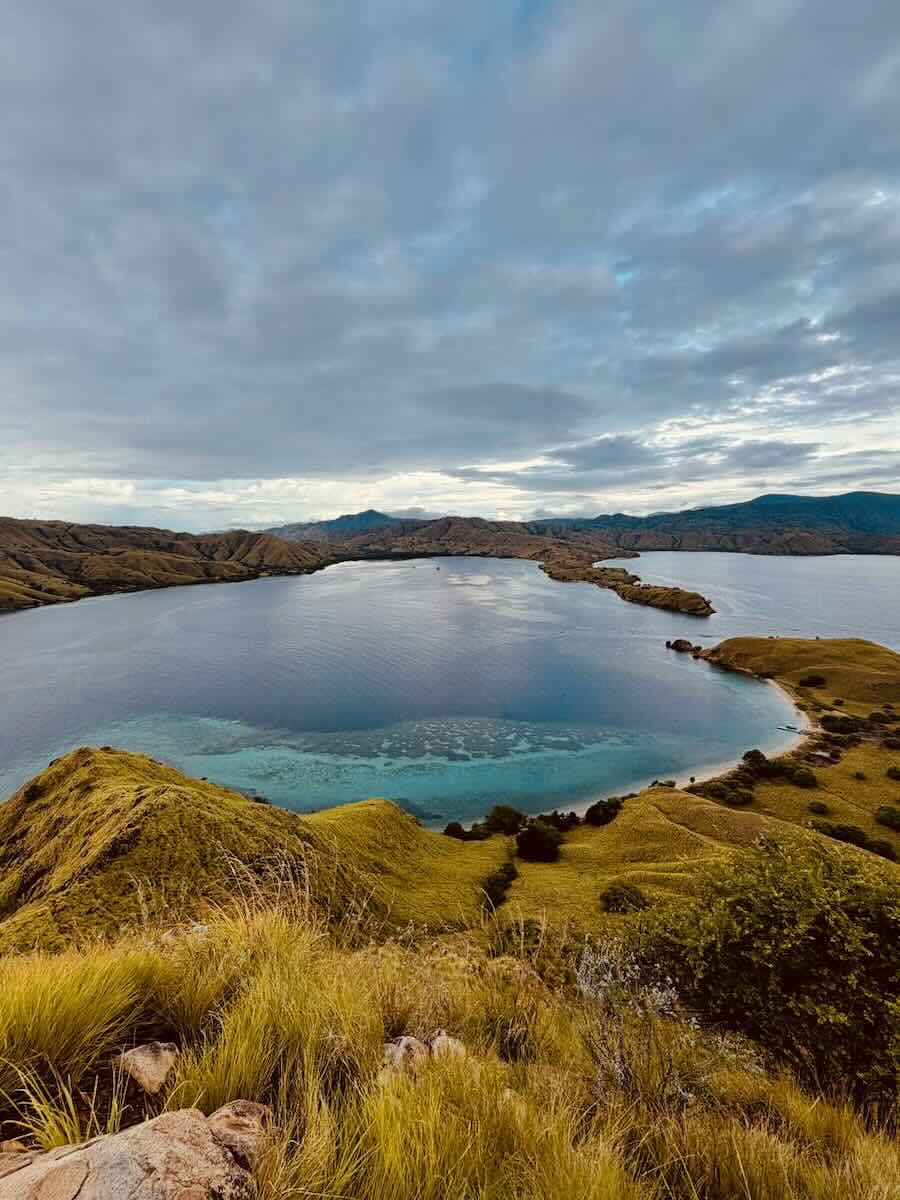
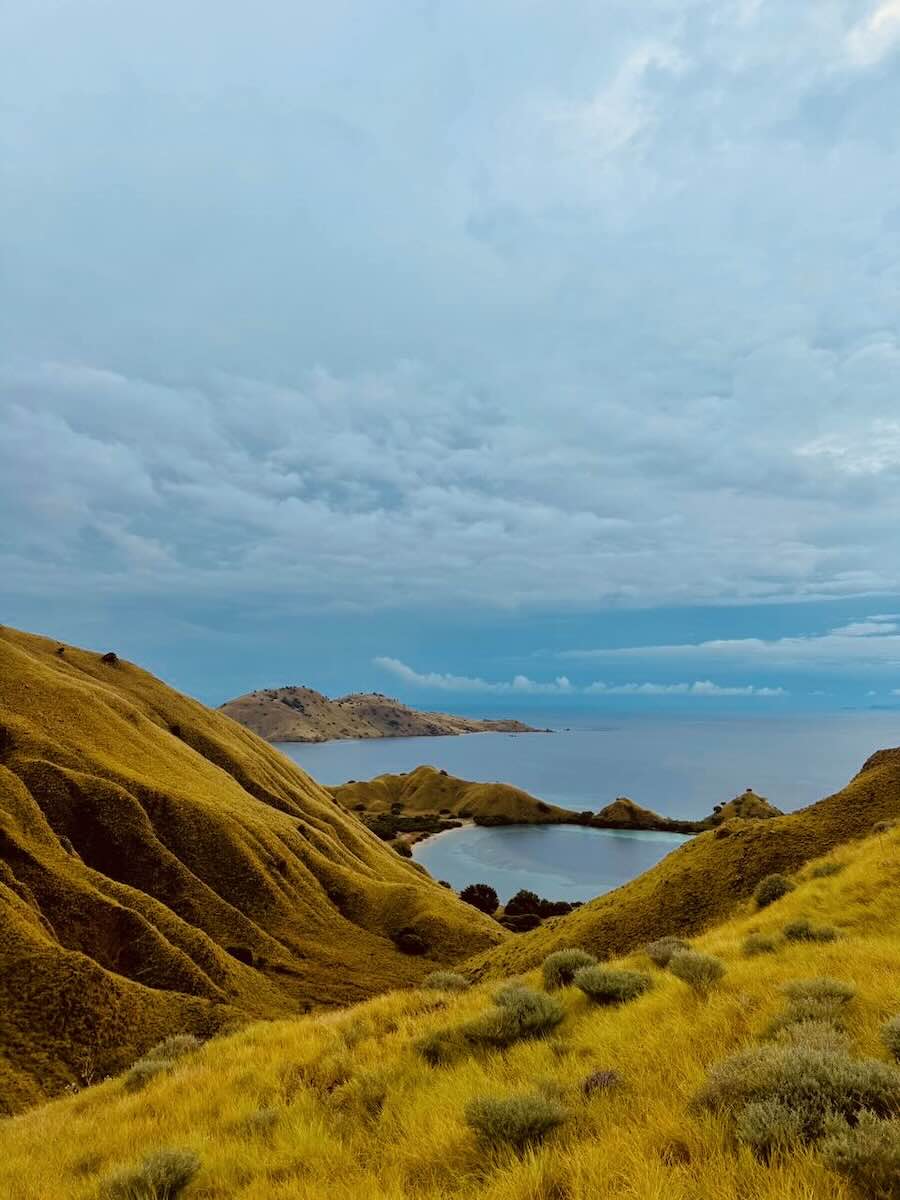
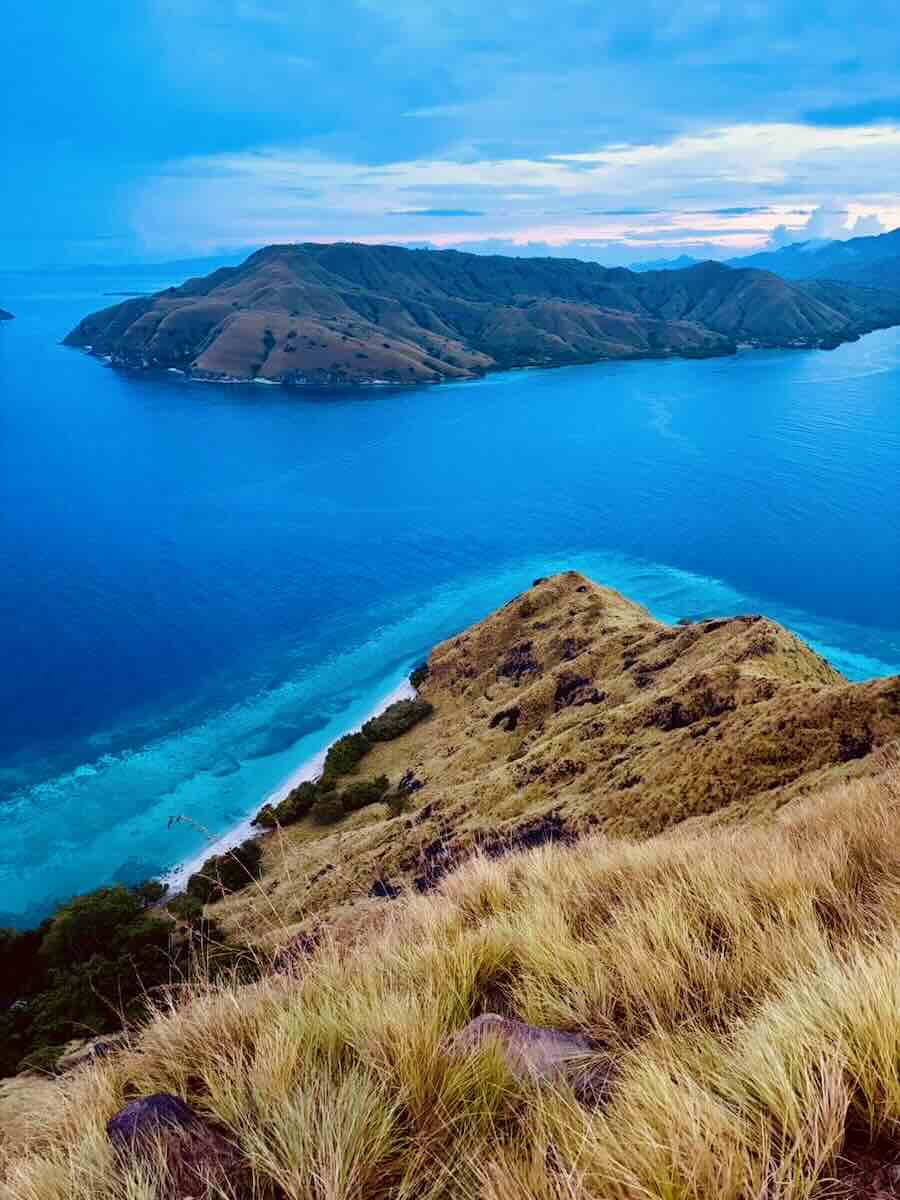
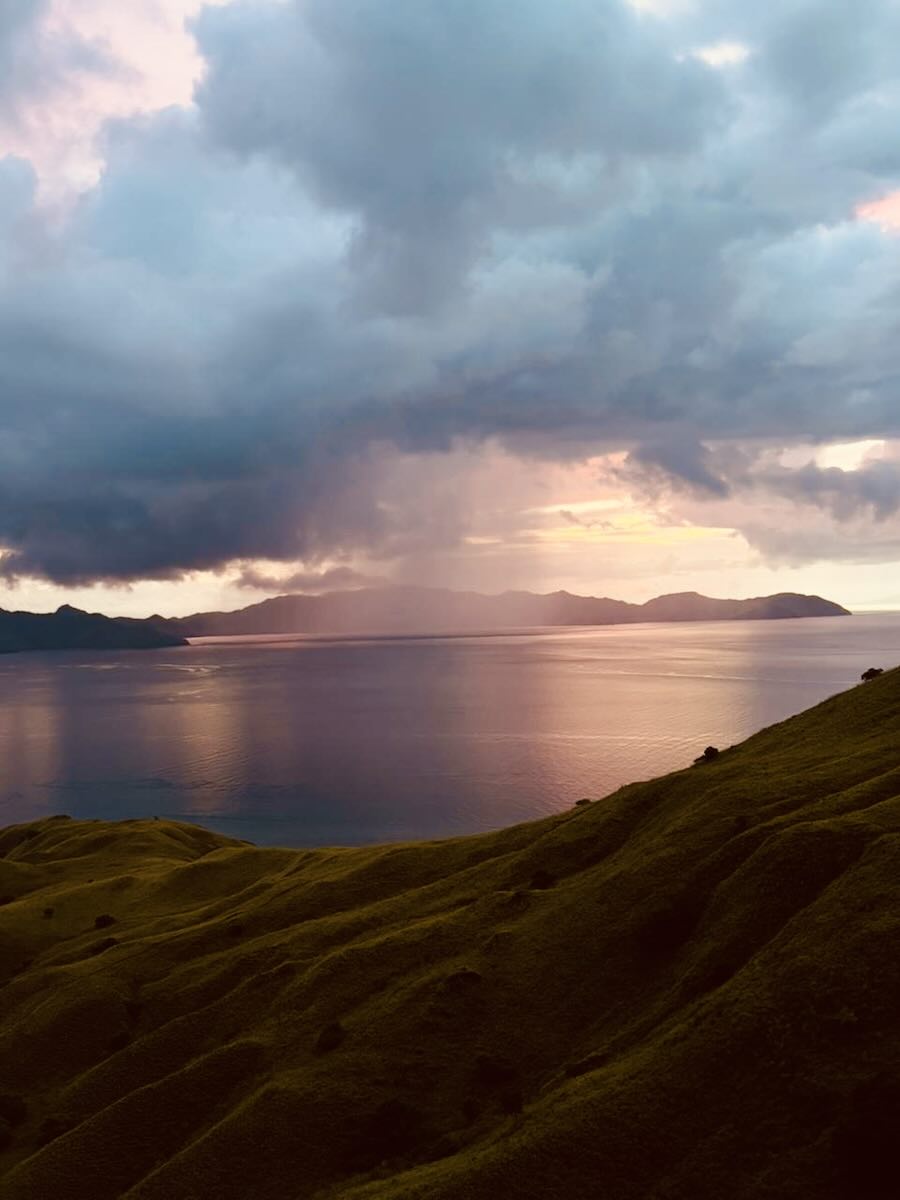
9. Hike Gili Lawa Darat
Gili Lawa gives you another big Komodo viewpoint without simply repeating Padar.
The walk is shorter but steep and very exposed, and the view from the top looks across narrow channels, islands, coral shallows and anchored boats. We visited as part of our longer charter route and spent the night nearby, which meant we could experience the area without racing back to Labuan Bajo. Go early or later in the afternoon. The midday sun in Komodo is not interested in your personal wellbeing.
Best for: Hiking, sunrise, sunset and boat views
Time needed: Around 1 to 2 hours
Pair with: Northern Komodo snorkeling or diving
10. Dive The Cauldron / Shotgun Point
This is not a casual beginner snorkeling recommendation.
The Cauldron, commonly called Shotgun, sits in a narrow channel where tidal water can move extremely quickly. That is precisely why experienced divers love it. You can get dramatic drift conditions, reef sharks, giant trevally and huge schools of fish, but the site also deserves respect.
The wider Komodo area is internationally known for strong currents, and the Indonesian tourism authority recommends experienced operators for challenging dive sites. If you’re diving, let your dive master make the call based on the tide and your experience. If you’re snorkeling, only enter when a professional guide says the conditions are appropriate for you. This is not where we freestyle.
Best for: Experienced divers and strong-current diving
Time needed: Dive dependent
Pair with: Sebayur, Gili Lawa or a dive liveaboard
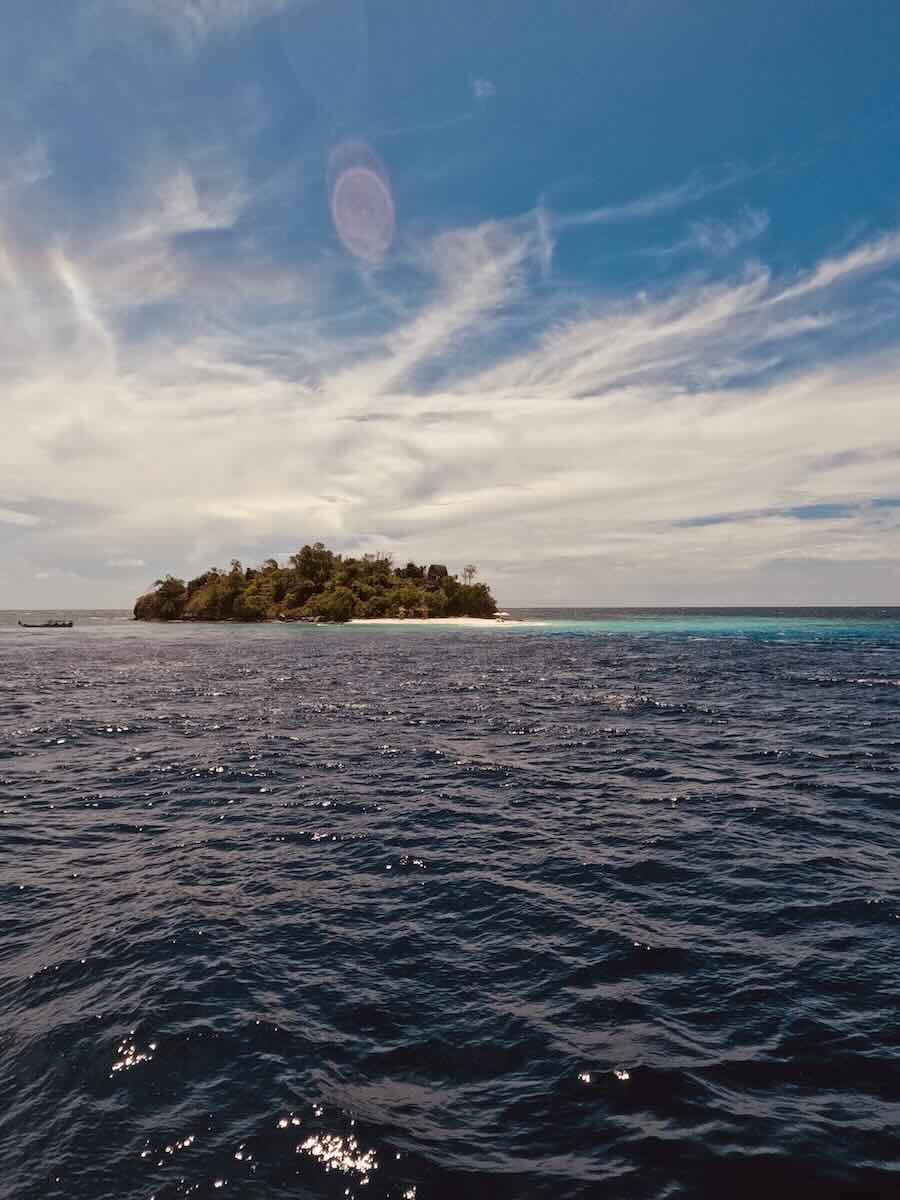
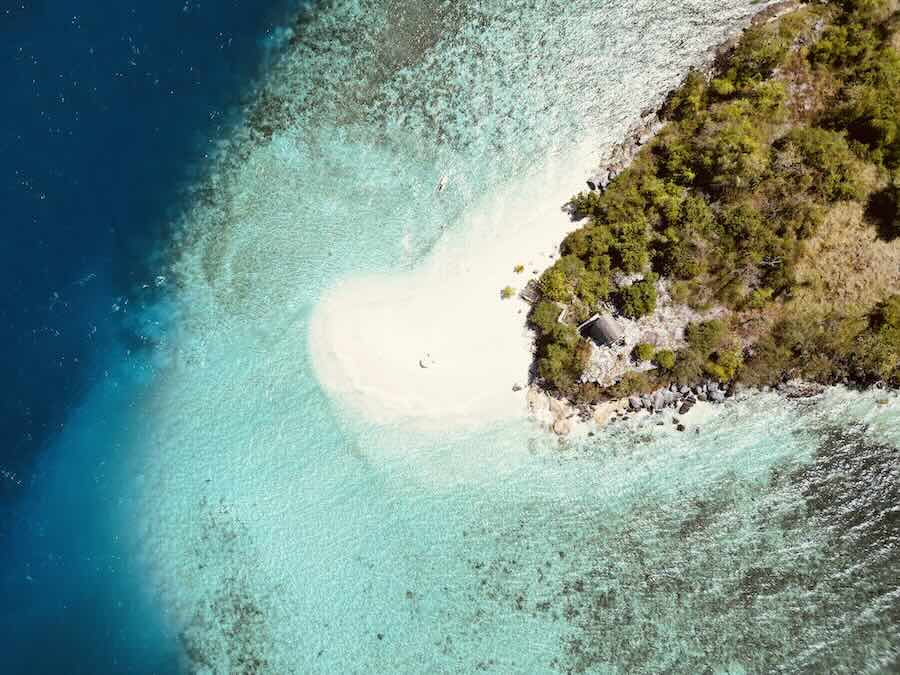
11. Private Island Dinner at Papanga
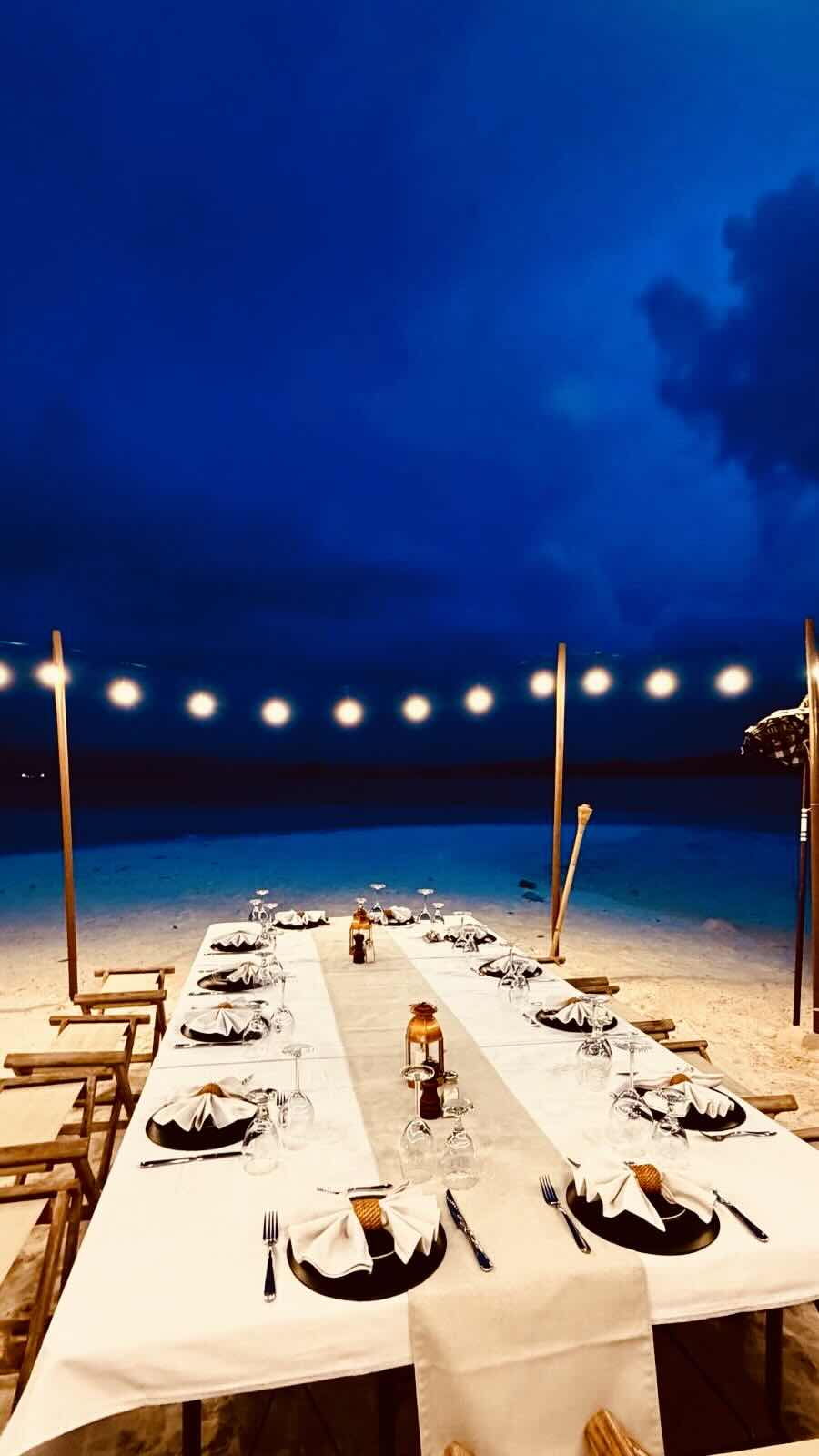
One of my favourite evenings was a beach dinner set up during the charter. After several days of diving, hiking and swimming, the crew arranged dinner on a quiet beach with the boat anchored nearby. There was food, music, sunset and basically nobody else around. It was luxurious, but also weirdly simple. Sand. Sea. Good food. People you like. That is plenty.
This type of private beach setup isn’t a standard attraction you independently book once you arrive at Komodo. It was part of our private charter experience, so ask your operator beforehand if something similar can be arranged.

LABUAN BAJO
Labuan Bajo: Before & After Your Komodo Trip
Labuan Bajo sits on the western tip of Flores and is the main gateway to Komodo National Park. It has grown considerably as a tourism hub, but it still feels like a working harbour town with boats coming and going constantly.
Most travelers fly here, sleep for at least one night and then leave for Komodo by boat. Official Indonesian tourism information also describes Labuan Bajo as the main gateway to the park. Read the official Labuan Bajo guide here. I would arrive at least one day before your liveaboard if possible.
Do not schedule your flight to land 47 minutes before your boat leaves and then act betrayed when aviation, luggage and traffic fail to coordinate around you personally.
Best Things to Do in Labuan Bajo
If you have an extra day, consider:
- Sylvia Hill for sunset
- Batu Cermin Cave
- Rangko Cave
- Waecicu Beach
- Cunca Wulang Waterfall if you have more time
Sylvia Hill is one of the area’s established sunset viewpoints, while Waecicu is a quieter beach area north of central Labuan Bajo.
Where to Eat in Labuan Bajo
Seafood is the obvious choice. You’ll find waterfront restaurants, casual Indonesian warungs, cafés and hotel restaurants around town. Try grilled fish, squid, prawns, rice, vegetables and sambal. If you’re leaving on a liveaboard the next morning, this is also your moment to buy snacks.
WHERE TO STAY
Where to Stay in Labuan Bajo for Komodo National Park
Labuan Bajo Harbour / Town
Best for: Convenience, restaurants, cafés and boat departures.
If you only have one night before or after your Komodo trip, I would stay relatively close to town. You are near the harbour, food, dive shops and the airport. This is the practical choice. I would choose this area if you are spending only one night in town before or after your Komodo liveaboard.
Waecicu Beach
Best for: Resorts, sea views and relaxing after a liveaboard
If you want somewhere calmer, look around Waecicu Beach north of town.
The area has a more resort-like feel and much better beach scenery than central Labuan Bajo. Indonesia’s tourism authority also highlights Waecicu for its clear water, beach and sunset views. See the official Waecicu Beach page here.
Stay on a Komodo Liveaboard
If Komodo itself is the reason you came, your most memorable accommodation may simply be the boat. Wake up. Open the cabin door. Island. Very difficult hotel amenity to compete with.
WHEN TO GO
Best Time To Visit Komodo National Park
The easiest period for most travelers is generally April to October, when western Flores and Komodo experience their drier season and outdoor activities are easier to plan. Indonesia Travel also describes April to October as the dry season for the area.
April to June
The landscape can still have more green in it. Good if you want a mix of greener hills and relatively dry weather.
July to August
Very dry. Very photogenic. Also peak holiday season. Expect more visitors around famous stops.
September to October
Still generally dry and excellent for island scenery. A good period if you want the classic golden Komodo hills.
November to March
Rain becomes more likely and boat conditions can become less predictable. That doesn’t mean Komodo shuts down. It means you need more flexibility. If your entire trip depends on one particular snorkeling site at one particular hour on one particular day, the ocean may enjoy humbling you.
HOW TO GET AROUND
Getting Around Komodo National Park
Boats
Inside the national park, transport is basically boats. Speedboats cover distances quickly. Traditional Phinisi boats move more slowly but give you the liveaboard experience.
Labuan Bajo
In Labuan Bajo itself you can use:
- Hotel transfers
- Taxis
- Scooters
- Private drivers
- Local transport arranged through accommodation
Car’s Tip
Leave some buffer time around flights. I would arrive in Labuan Bajo the day before an important liveaboard departure whenever possible. And I would not book a long Komodo boat trip to finish three hours before an international flight from another island.
COST LIVEABOARD
How Much Does a Komodo Trip Cost?
Komodo is not the cheapest destination in Indonesia, and how much a Komodo trip costs depends heavily on the type of boat you choose. As a rough 2026 guide, a 3-day, 2-night shared liveaboard generally starts around IDR 3,000,000 to 4,000,000 per person for a basic boat, while more comfortable phinisi cabins can easily cost IDR 5,000,000 to 9,000,000+ per person. Private liveaboards vary enormously depending on the boat, level of luxury and number of guests, but expect anything from roughly IDR 12,000,000 to 25,000,000+ per boat per day, with luxury charters going much higher.
If you do not want to sleep on a boat, a shared speedboat day trip from Labuan Bajo usually costs around IDR 1,300,000 to 2,500,000 per person. These trips normally visit several of the major highlights, such as Padar Island, Pink Beach, Komodo or Rinca Island, Taka Makassar and Manta Point, although the exact route depends on weather and sea conditions.
Typical Komodo Trip Costs in 2026
| Expense | Approximate Cost |
| Shared 3D2N liveaboard | IDR 3,000,000 to 9,000,000+ pp |
| Private liveaboard | IDR 12,000,000 to 25,000,000+ per boat/day |
| Shared speedboat day trip | IDR 1,300,000 to 2,500,000 pp |
| Komodo National Park entrance | IDR 250,000 pp |
| Scuba diving day trip | Around IDR 2,500,000 to 3,000,000 pp |
| Official diving activity fee | IDR 25,000 pp/activity |
| Labuan Bajo airport transfer | Usually inexpensive, depending on hotel/driver |
The official Komodo National Park entrance fee for international visitors is currently IDR 250,000 per person, and this includes trekking, wildlife observation and snorkeling. Scuba diving carries an additional IDR 25,000 activity fee. However, your final park-related bill can include other local guide, ranger, harbor or administrative charges depending on the itinerary, so always ask your boat operator for the total park fees in writing before booking rather than assuming the advertised boat price is your final price.
For diving, a full-day trip from Labuan Bajo with around three dives currently costs roughly IDR 2,500,000 to 3,000,000 per person, with equipment, lunch and a dive guide often included. Park fees are frequently charged separately.
What Is Usually Included in a Komodo Boat Trip?
Most liveaboard packages include your cabin or sleeping space, meals, drinking water, boat crew, fuel, snorkeling equipment and transport between the islands. Some also include pickup and drop-off in Labuan Bajo.
What is often not included are national park fees, diving, alcoholic drinks, crew tips, flights to Labuan Bajo and accommodation before or after the boat trip.
Before paying a deposit, ask for an itemized list of exactly what is included. Two Komodo tours advertising the same price can end up costing very different amounts once all the extras are added.
My tip: Do not automatically book the cheapest boat. Safety standards, cabin quality, food, group size and the condition of the boat vary enormously in Labuan Bajo, and this is one part of Indonesia where paying a little more for a reputable operator can be money very well spent.
PACKING LIST
What To Pack For Komodo National Park
I would bring:
- Sunscreen
- Hat
- Sunglasses
- Reusable water bottle
- Rash guard
- Swimwear
- Dry bag
- Reef shoes
- Proper shoes for Padar
- Motion-sickness tablets
- Power bank
- Waterproof phone pouch
- Lightweight clothing
- Light layer for evenings on the boat
- Mosquito repellent
- Cash
- Any medication you need
- Dive certification card if diving
And ideally: Travel insurance that actually covers the activities you’re planning. If you are diving, read the policy rather than simply deciding the word “travel” probably covers being 25 metres underwater in a current.
TRAVEL TIPS
Komodo National Park Travel Tips
Choose Your Boat Carefully
This is probably the single most important decision. Ask about:
- Life jackets
- Safety equipment
- Crew
- Maximum passenger numbers
- Cabins
- Bathrooms
- Meals
- Snorkeling equipment
- Diving equipment
- Park fees
- Alcohol
- Transfers
- Weather policy
Cheap isn’t automatically dangerous. Expensive isn’t automatically safe.
Follow the Rangers Around Komodo Dragons
Komodo dragons are wild predators. Official tourism guidance recommends ranger-led visits and keeping a safe distance from the animals. No touching. No feeding. No wandering off. No attempting a dramatic selfie two metres away.
Respect the Ocean
Komodo has serious currents. That is one of the reasons the marine life is so extraordinary, but it also means not every snorkeling or diving site is appropriate for every swimmer. If a guide tells you conditions are not good enough to enter, listen.
Don’t Touch the Coral
This should be extremely obvious. Do not stand on coral, grab coral, kick coral with your fins or take pieces home.
Carry Cash
Once you’re out in the park, don’t expect a convenient ATM to appear behind a rock. Carry enough cash for tips, fees and small expenses.
Book Early During Busy Periods
Komodo becomes particularly busy during:
- July and August
- Indonesian public holidays
- Eid travel periods
- Christmas
- New Year
If your trip passes through Bali during Nyepi, remember that Bali’s airport closes during the silence period, which can affect onward travel to Labuan Bajo.
SAFETY
Is Komodo Safe?
For most visitors, yes, if you respect the environment and use competent operators. The main risks aren’t mysterious. They are:
- Strong ocean currents
- Poor boat choices
- Heat and dehydration
- Slippery or steep hiking paths
- Wildlife
- Diving beyond your experience level
Treat Komodo like an adventure destination rather than a resort and you’ll make much better decisions.
VISA
Visa for Komodo National Park
Komodo National Park is part of Indonesia, so you do not need a separate Komodo visa. The same Indonesia visa rules apply whether you are visiting Bali, Java, Lombok, Sumba or Labuan Bajo for Komodo National Park.
For most travelers, the easiest option is usually the Visa on Arrival or e-VOA, which is normally valid for 30 days and can often be extended once for another 30 days. If you want to stay longer in Indonesia, the C1 Tourist Visa may be a better option, especially if you are planning a longer route through Bali, Java, Lombok, Komodo, Sumba or other islands.
Before you travel, make sure your passport is valid for at least 6 months and have proof of onward or return travel. complete any required arrival forms, and always check the latest visa rules through the official Indonesian eVisa website or a trusted visa agent. Visa rules in Indonesia can change, and nothing ruins a Komodo boat trip faster than airport paperwork drama before you even reach the dragons.
Before you book anything, always double-check the official Indonesia eVisa website for current visa rules and the All Indonesia arrival card platform for arrival requirements. If your route includes Bali, check the official Bali tourist levy website before arrival too.
Frequently Asked Questions About Visiting Komodo National Park
Is Komodo National Park worth visiting?
Yes. It combines some of Indonesia’s most dramatic landscapes with Komodo dragons, excellent snorkeling and diving, manta rays and unusual beaches. It is more expensive than many Indonesian destinations, but the experience is very different from travelling around Bali or Java.
How many days do you need in Komodo National Park?
I recommend 3 days and 2 nights for most first-time visitors. Two days and one night works if you’re short on time, while a one-day speedboat trip is possible but rushed.
Is a Komodo liveaboard worth it?
Yes, if your budget allows it. Sleeping inside the national park gives you more time for early hikes, sunsets, snorkeling and quieter stops without repeatedly returning to Labuan Bajo.
Can you visit Komodo National Park without a liveaboard?
Yes. One-day speedboat tours leave from Labuan Bajo and visit several of the main attractions.
Where do Komodo National Park tours start?
Most start in Labuan Bajo on Flores. It is the main tourism gateway to the park.
Where can you see Komodo dragons?
The two main visitor areas are Komodo Island and Rinca Island, where visits take place with park rangers.
Can you swim with manta rays in Komodo?
Snorkeling and diving trips visit manta areas such as Manta Point, but sightings depend on wildlife and sea conditions and are never guaranteed.
Is Komodo good for snorkeling?
Yes. Komodo National Park has an exceptionally rich marine ecosystem and is known for coral reefs, reef fish, turtles, manta rays and world-class diving.
When is the best time to visit Komodo?
For most travelers, April to October is the easiest window because it overlaps with the drier part of the year. Weather and ocean conditions still vary, so boat routes should always remain flexible.
Can you visit Komodo from Bali?
Yes. Fly from Bali to Labuan Bajo and continue into Komodo National Park by boat. It is best treated as a separate multi-day part of your Indonesia trip rather than a day trip from Bali.
Do you need a guide to see Komodo dragons?
Yes. Visits to dragon areas are ranger-guided for safety.
Is Labuan Bajo worth staying in?
Yes, especially for one night before and after your boat trip. It gives you a buffer around flights and access to restaurants, cafés, viewpoints and nearby attractions.
EXPLORE MORE
Continue Exploring Indonesia
Komodo is incredible, but it gives you a very particular version of Indonesia: boats, wildlife, diving and dramatic dry islands.
If you’re building a longer trip, continue with my 3-Week Indonesia Itinerary to see how I would combine different parts of the country without turning the entire holiday into transport.
Trying to decide which islands are actually worth your time? Read my 10 Best Islands in Indonesia, or have a look at my Travel Guides below.
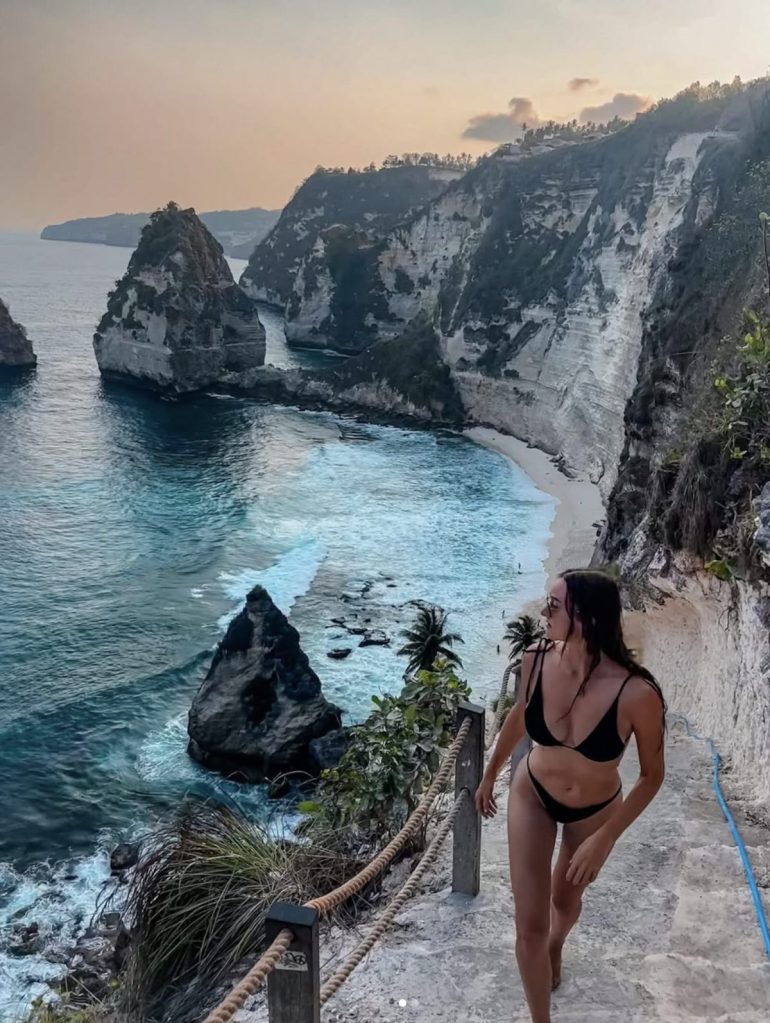
TROPICAL GETAWAY
Nusa Islands Travel Guide

THE ISLAND THAT HAS IT ALL
Bali Travel Guide
TRAVEL GUIDE
Rote Travel Guide

ISLAND LIFE
Lombok Travel Guide

BEST RUGGED ROADTRIP ISLAND
Sumba Travel Guide

CULTURAL ROUTE
Java Travel Guide

TRAVEL GUIDE
Best Snorkeling in Bali

TRAVEL GUIDE
Volcanic Hikes in Indonesia
TRAVEL GUIDE
Top 10 Islands in Indonesia

NEWSLETTER
Subscribe for travel tips, new vlogs & life behind the scenes.
© 2026 Keep Up With Car – All rights reserved.
